

Entering medical college feels like reaching the final destination. In reality, it is only the beginning of a demanding, competitive, and deeply transformative journey. Many students enter MBBS with excitement but later realise they missed some truths that could have saved time, stress, and regret. These are the lessons every MBBS student learns too late, and knowing them early can change your entire journey.
Whether you are in your first year, an intern, or preparing for postgraduate exams, this guide will help you make smarter decisions from day one.
MBBS Is a Marathon, Not a Sprint
Many students start with extreme energy, trying to study everything at once. Within months, burnout begins.
The real win in MBBS comes from consistency, not random bursts of motivation. Studying 2 focused hours daily for months is far more powerful than panic studying before exams.
What to do instead
- Build a weekly routine
- Revise regularly
- Keep realistic targets
- Protect sleep and health
- Avoid comparing daily progress with others
According to the World Health Organization, student stress and burnout can directly affect performance and wellbeing.
Memorizing Is Not the Same as Understanding
In school, memorization often works. In medicine, it fails quickly.
You may remember a definition today and forget it tomorrow. But when you understand why a disease happens, how symptoms connect, and why treatment works, recall becomes easier.
Concept clarity beats rote learning every single time.
Example
Instead of memorizing hypertension drugs as a list, understand how blood pressure regulation works. Suddenly the drugs make sense.
Use trusted resources like the National Medical Commission guidelines and standard textbooks.
Seniors Can Save You Years of Mistakes
Many students avoid talking to seniors. Big mistake.
Seniors already know:
- Which books are worth your time n- How practical exams actually work
- Which notes are useful
- Internship hacks
- PG exam strategies
- How to manage difficult postings
One honest conversation with the right senior can save months of confusion.
Choose mentors carefully. Not every topper is a good teacher.
Attendance Matters More Than You Think
Students often treat attendance as a technical requirement. Later they realize it affects internal marks, exam eligibility, practical confidence, and faculty perception.
Even if lectures are not perfect, showing up has hidden advantages:
- Better discipline n- Exposure to repeated concepts
- Easier note collection
- Better relationships with faculty
- Less last-minute stress
Start PG Preparation Earlier Than You Feel Ready
A common regret among interns is: I should have started earlier.
This does not mean intense coaching from first year. It means building foundations early.
Smart early preparation
- Make first and second year concepts strong
- Create short notes while learning
- Solve MCQs gradually
- Keep subjects interconnected
- Revise high-yield topics yearly
Platforms and exam trends change, but strong basics never go out of date.
Communication Skills Matter as Much as Marks
Many brilliant students struggle in clinics because they cannot communicate well with patients or teams.
Medicine is not only science. It is also trust.
A patient remembers how you spoke, not just what you prescribed.
Practice:
- Listening without interrupting
- Explaining in simple language
- Showing empathy
- Clear case presentations
- Professional behavior with nurses and staff
The Medical Council style competency-based education model also emphasizes communication and professionalism.
Your Mental Health Needs Active Care
Medical students often normalize stress, anxiety, poor sleep, and emotional exhaustion.
That mindset is dangerous.
You do not become stronger by suffering silently. You become exhausted.
Protect your mind
- Keep one hobby alive
- Exercise regularly
- Talk to trusted people
- Seek counseling if needed
- Reduce toxic comparison on social media
- Take breaks without guilt
Asking for help is maturity, not weakness.
Internship Teaches What Books Never Can
Many students underestimate internship until it begins.
Internship teaches:
- Real patient flow
- Time pressure
- Documentation
- Emergency basics
- Team coordination
- Practical confidence
- Real hospital hierarchy
Show up seriously. The habits you build here often shape your future residency performance.
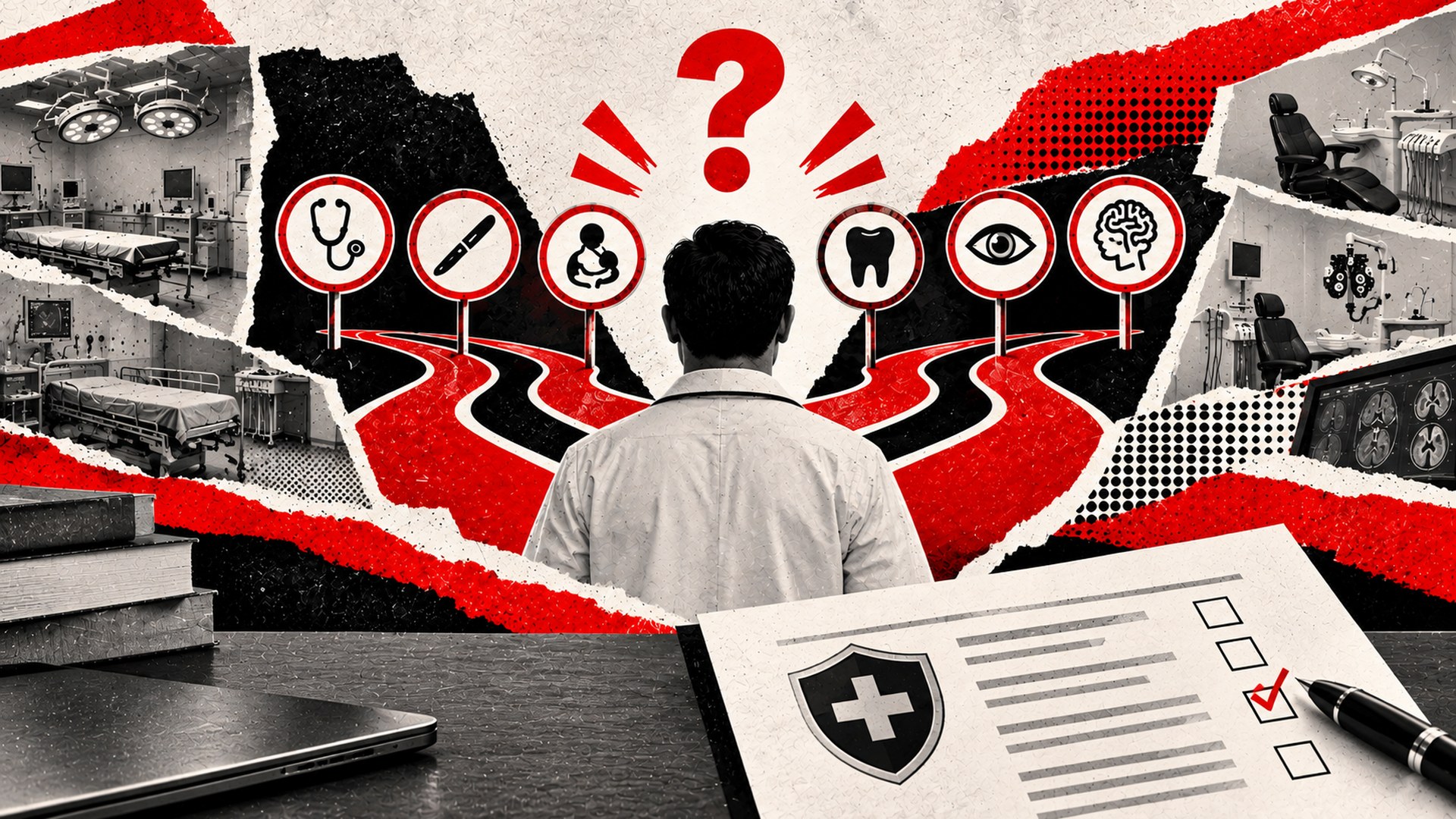
Your Career Has More Options Than You Think
Many students think only one path matters: getting a PG seat immediately.
Yes, postgraduate training is valuable. But it is not the only route.
Possible paths include:
- Clinical practice
- MD/MS/DNB research
- Hospital administration
- Public health
- Medical writing
- Health tech
- UPSC and government services
- Teaching
- Entrepreneurship
Do not blindly copy someone else’s definition of success.
Comparison Is a Silent Confidence Killer
Someone will always score more, publish more, speak better, or crack exams earlier.
If comparison becomes constant, confidence collapses.
Measure yourself by growth:
- Am I better than last semester?
- Do I understand more than before?
- Am I improving my discipline?
That is a healthier scoreboard.
Final Reality Check
MBBS is hard. It tests memory, patience, discipline, emotional strength, and identity. But the students who grow best are not always the smartest. They are the ones who adapt early.
If you learn these lessons now, you avoid the regret many students feel later. Start small, stay consistent, and build both competence and character.
FAQ SECTION
What is the biggest mistake MBBS students make early?
Many students rely only on last-minute studying and ignore consistent revision.
When should MBBS students start PG preparation?
Start by building concepts from first year. Serious exam-focused prep can grow later.
Is MBBS only about studying textbooks?
No. Clinical skills, communication, teamwork, and emotional resilience are equally important.
How can MBBS students manage stress?
Maintain routine, sleep well, exercise, stay connected with friends, and seek help when needed.
Are there career options after MBBS besides PG?
Yes. Public health, administration, research, teaching, health tech, writing, and government roles are examples.