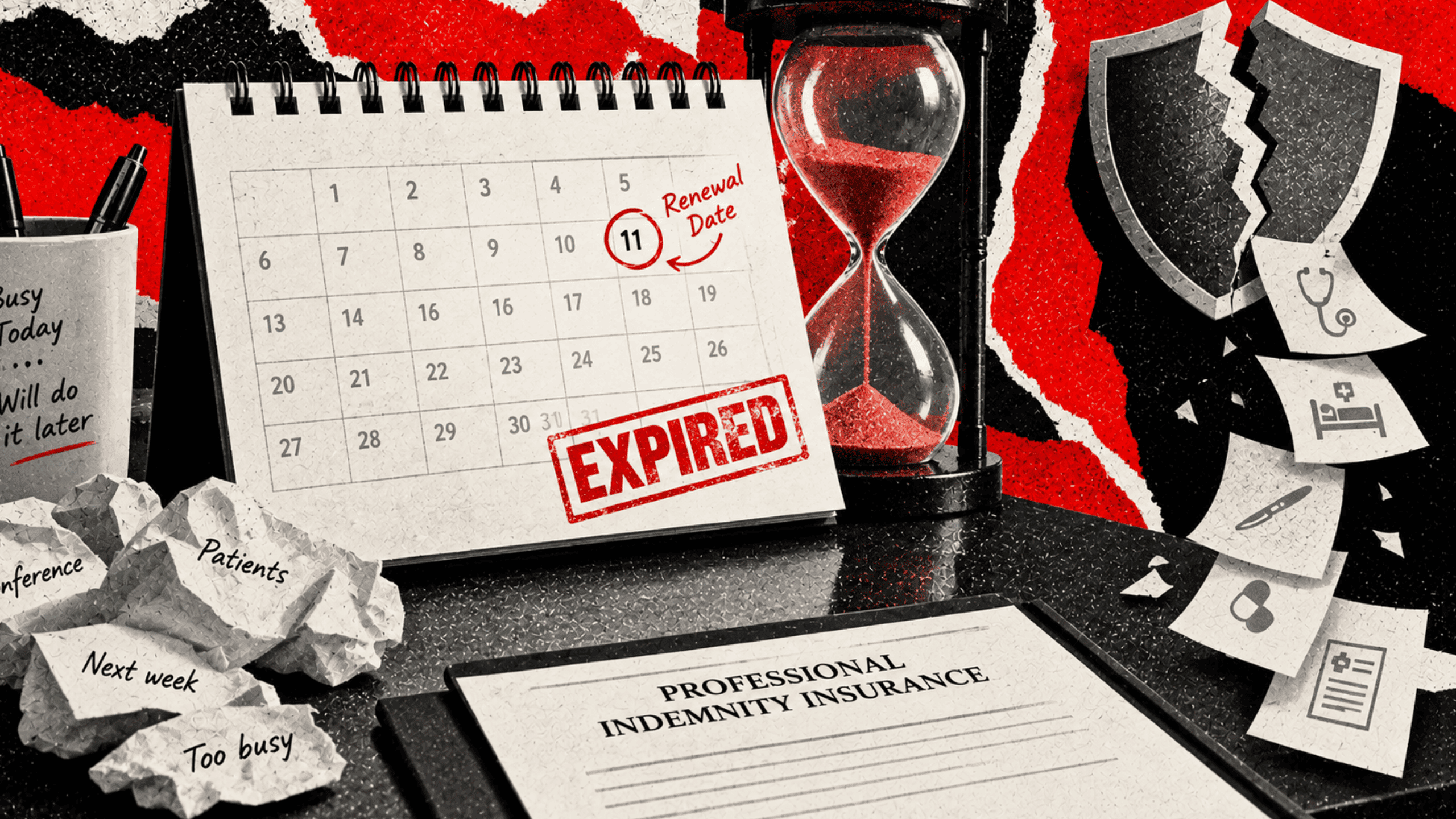

You have done everything perfectly right.
Bought the policy in your second year of practice.
Renewed it nine times.
Never missed a single payment.
A claim comes in. Consequently, you forward the file to your insurer with absolute confidence.
Three weeks later, the official letter simply says repudiated.
It was not because the medical treatment was wrong. It was because of a line on a form you filled in years ago. Specifically, an indemnity insurance claim rejected non disclosure is the quietest way to lose cover you were certain you had.
Why Forms Cause An Indemnity Insurance Claim Rejected Non Disclosure
This is the part that feels completely unjust the first time you meet it. However, it is worth understanding deeply rather than resenting.
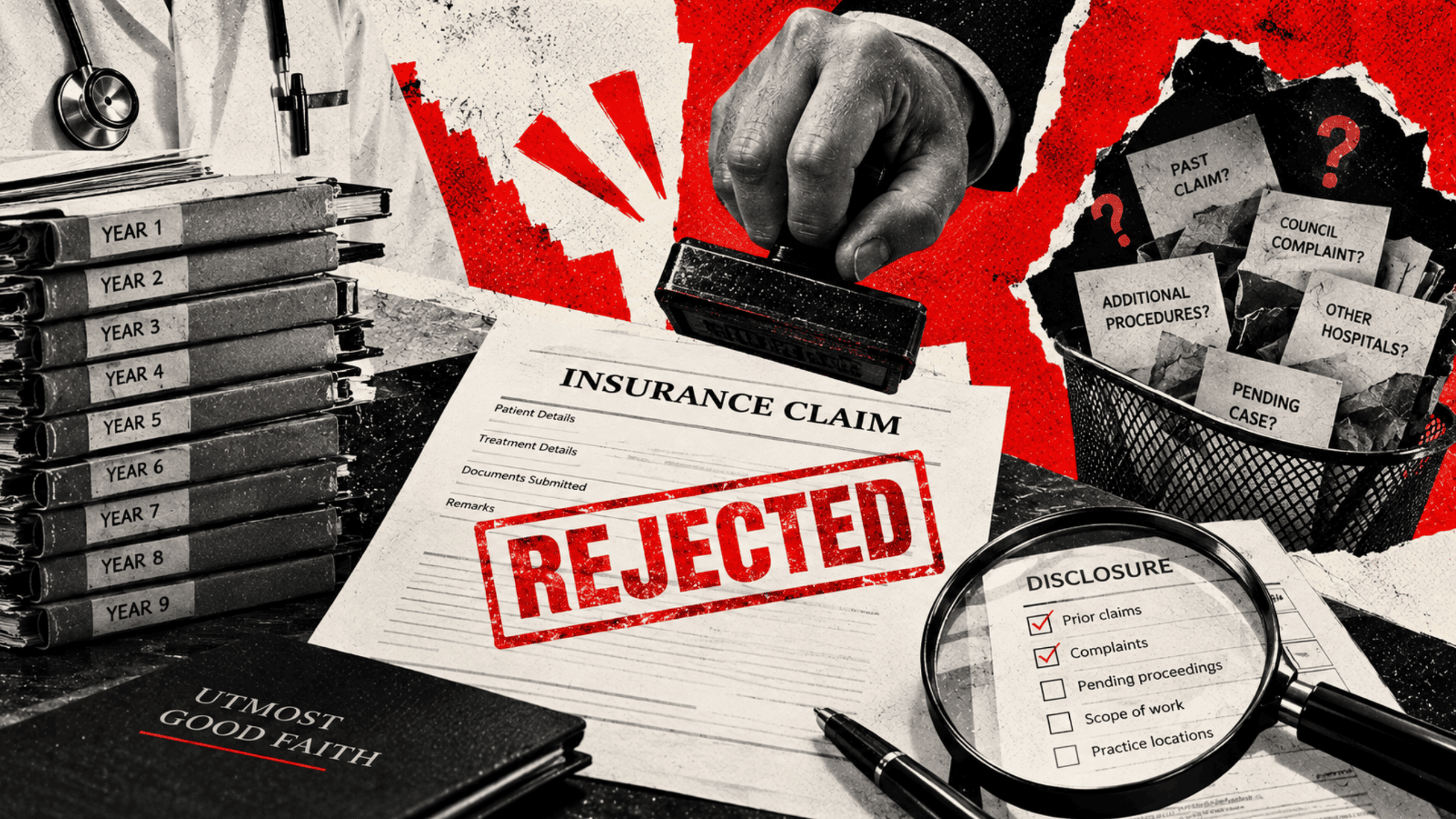
Insurance in India runs strictly on utmost good faith. Your insurer never watched you operate. Furthermore, they never read a clinical case sheet before issuing the policy. Therefore, it relied entirely on what you wrote.
So the duty runs your way. You are legally required to volunteer anything a reasonable underwriter would want to know. Conversely, it is not merely to avoid lying about what was directly asked.
It is a much heavier duty than ordinary contract law imposes. Specifically, it runs almost entirely one way. Consequently, that asymmetry is the exact price of a policy issued in ten minutes without anyone inspecting your clinic. Review the strict guidelines under the Indian Contract Act to understand these legal duties properly.
What Counts As Material In A Doctor Liability Claim
A fact is material if it would have changed the underwriter’s decision. By that specific test, more counts than you would expect.
- Any prior claim or notice: Paid, defended, or withdrawn. All of it matters.
- Complaints on record: To you, your hospital, or a medical council.
- Pending proceedings: Consumer matters, civil suits, and council enquiries.
- Your real scope of work: The actual procedures you perform, not just the ones your degree implies.
- Every practice location: Including the hospital you visit twice a month.
How A Medical Malpractice Rejection Goes Wrong Without Lying
Deliberate concealment certainly exists. However, it is not the common story. The common story is smaller, more ordinary, and far easier to imagine happening to you.
Picture the actual sequence. You renew your medical indemnity policy online in four minutes. Consequently, you never re-read the declarations carried over from last year. You moved from consulting into interventional work two years ago. Therefore, you never updated the specialty. A legal notice arrived in 2023. You replied, nothing followed, and you genuinely forgot.
Then a new claim is filed. The investigator lines up hospital records and old correspondence against your proposal form. Therefore, the chronological gap becomes the entire case.
Notice how little of that involves actual dishonesty. Specifically, it involves a busy doctor treating a renewal as a simple administrative chore. Consequently, this is exactly how an indemnity insurance claim rejected non disclosure actually arises.
What An Indemnity Insurance Claim Rejected Non Disclosure Costs You
Work through the financial consequences properly. Specifically, they run further than the single claim you were trying to make. An indemnity insurance claim rejected non disclosure almost never turns on clinical judgement. Conversely, it turns entirely on a simple form.
The claim is refused immediately. The policy may be treated as void from inception. Furthermore, premiums are usually forfeited entirely. Consequently, the repudiation follows you to your next insurance provider.
Preventing An Insurance Claim Rejection During Renewal
Treat your renewal as a completely fresh proposal. Re-read every single declaration carefully. It only takes twenty minutes, once a year.
- Report notices when they arrive: Do not wait for them to escalate.
- Disclose in writing: Always email it and keep the written acknowledgement.
- Update changes mid-term: Declare a new specialty, new hospital, or new procedure immediately.
- Over-disclose when unsure: An unnecessary declaration costs absolutely nothing.
If a refusal has already landed, do not accept it as final. Ask for the specific ground in writing. Then, test whether the omitted fact was genuinely material to the risk the insurer accepted. Insurers do sometimes over-apply this strict defence. The Council for Insurance Ombudsmen hears these specific disputes at no cost. Furthermore, consumer forums remain open beyond its financial limit.
Move incredibly quickly if you go that route. The time limit runs from the exact date of the insurer’s final reply. Consequently, a late complaint is often dismissed on that ground alone, without the merits being heard at all. Always consult your medico-legal advisor early.
The Part Worth Remembering About Professional Liability Insurance
Your active policy is only as strong as the answers behind it.
Nine years of paid premiums are decided by twenty minutes at renewal. Spend the twenty minutes carefully. Declare much more than feels necessary. Therefore, the liability cover will actually be there on the day it is finally tested. Understanding the risk of an indemnity insurance claim rejected non disclosure secures your medical practice permanently.
5 FAQ SECTION
Can an insurer reject my claim if I genuinely forgot a past incident?
Yes. Materiality is judged objectively. Therefore, an honest lapse of memory is not a defence. It may, however, affect how a forum views the case if you can prove there was absolutely no intent to conceal.
What is the difference between non disclosure and misrepresentation?
Non disclosure is failing to reveal a material fact. Conversely, misrepresentation is stating something inaccurate. Both can void a policy, though deliberate misrepresentation is treated far more severely.
Will my premium be refunded if the policy is voided for non disclosure?
Usually not. When a contract is treated as void from inception because of concealment, insurers generally retain the premium. Consequently, refunds are the rare exception rather than the rule.
Can I challenge a rejection based on non disclosure?
Yes. Ask for written reasons immediately. Then approach the Insurance Ombudsman or a consumer forum. Rejections have been overturned where the undisclosed fact was not material to the risk.
Do I have to declare a medical complaint that was withdrawn?
Yes. Materiality is entirely about what the underwriter would want to know, not about the final outcome. A withdrawn complaint still tells an insurer something important about your risk profile.