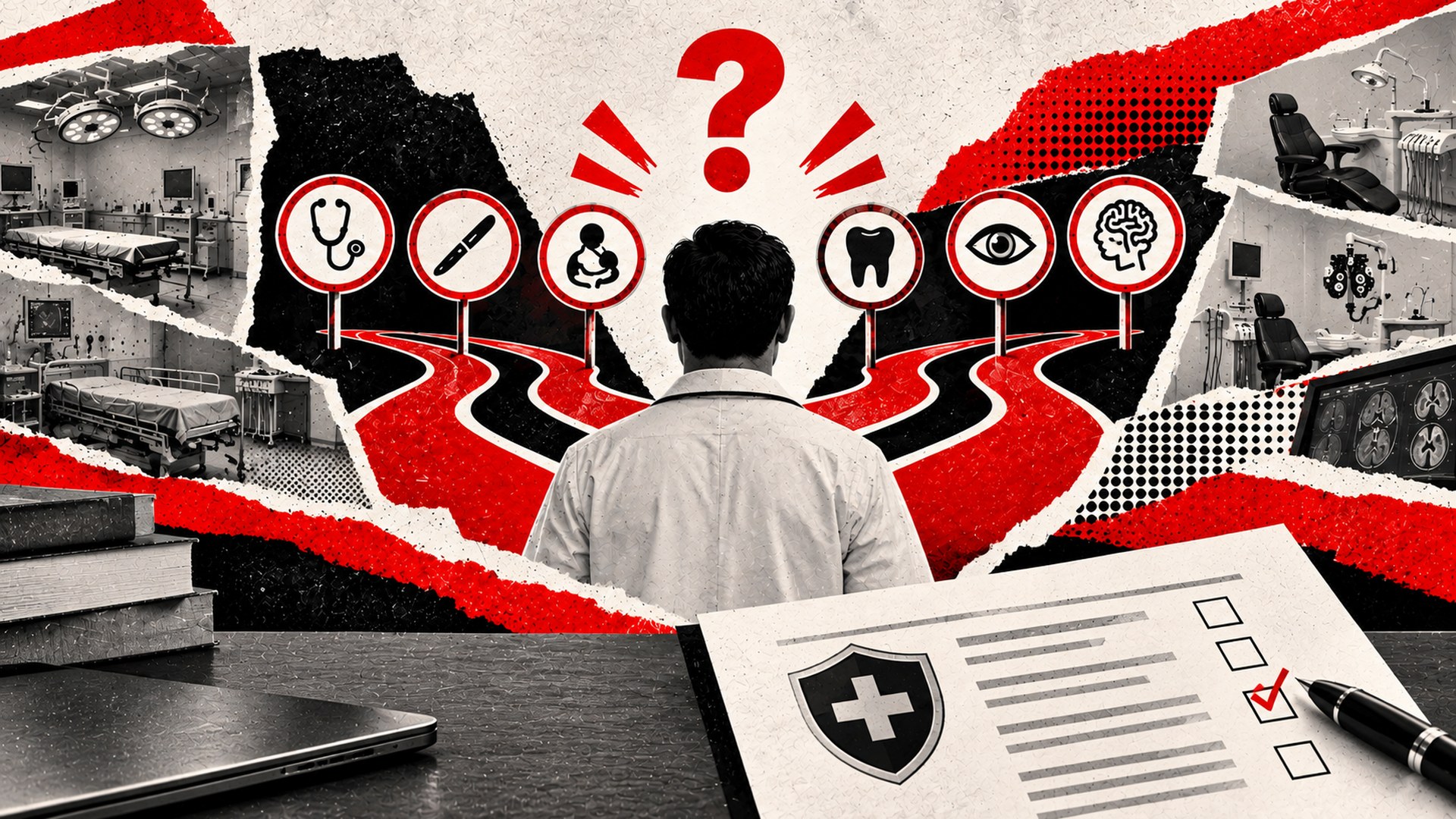


Failure hits differently in medicine. The standards are high, the competition is brutal, and many doctors tie their entire identity to performance. So when something goes wrong, an exam is failed, a seat is lost, a promotion is missed, a practice struggles, or a mistake happens, it can feel personal and permanent.
It is not.
Dealing with Failure in Medical Career is less about avoiding setbacks and more about responding to them intelligently. Failure can damage you or develop you. The deciding factor is what you do next.
Why Failure Feels So Heavy for Doctors
Medicine attracts high achievers. Many doctors are used to being among the top performers for years. That creates discipline, but it can also create fragility when results drop.
Failure feels intense because of:
- Identity linked to success
- Comparison with peers
- Family expectations
- Fear of wasted years
- Financial pressure
- Public embarrassment
- Perfectionism
- Responsibility mindset
The emotional reaction is real, but that does not mean the situation is final.
First Truth: Failure Is Data, Not Destiny
Most people react to failure emotionally before they analyze it logically.
They say:
- I am not good enough
- My career is over
- Everyone is ahead of me
- I ruined everything
That is drama, not diagnosis.
Failure is feedback. It reveals gaps in strategy, skill, timing, habits, preparation, or expectations.
Many high performers across fields discuss growth through setbacks, and resilience research supports adaptive recovery after adversity. You can explore resilience concepts through the American Psychological Association: https://www.apa.org/
Common Failures in a Medical Career
Failure does not always mean one big collapse. It often looks like:
- Failing entrance or postgraduate exams
- Not matching into a desired specialty
- Rejection from jobs
- Poor patient reviews
- Slow clinic growth
- Financial mistakes
- Burnout affecting performance
- Communication breakdowns
- Clinical errors followed by learning reviews
- Delayed career progress
These events hurt, but they are survivable.
Dealing with Failure in Medical Career: Practical Recovery Plan
1. Feel It, But Do Not Live There
You are allowed to feel disappointed, angry, embarrassed, or frustrated.
Take a short window to process it. Then move.
If you keep replaying pain without action, you turn one setback into months of self-sabotage.
2. Separate Event From Identity
You failed at something. That is different from being a failure.
One result cannot define your intelligence, future, or value.
Say it clearly:
- I failed an exam
- I am not a failure
That distinction matters.
3. Run a Brutally Honest Audit
Ask:
- What exactly went wrong?
- What was under my control?
- What was weak in my preparation?
- What assumptions were false?
- What skill was missing?
- What system failed?
No excuses. No self-pity. Just facts.
Growth starts where honesty begins.
4. Fix Process, Not Just Motivation
Most people respond to failure with emotional speeches and temporary energy.
Wrong move.
Instead, improve systems:
- Better study schedule
- Stronger mentorship
- Mock tests
- Time blocking
- Communication training
- Financial planning
- Rest and recovery routines
- Performance tracking
Systems outperform mood.
5. Protect Confidence While Improving
Confidence after failure should be realistic, not fake.
Use evidence:
- Past wins still count
- Skills can improve
- One setback is normal
- Many successful doctors struggled earlier
- Progress can restart immediately
Confidence built on truth lasts longer.
6. Stop Watching Everyone Else
Nothing worsens failure like constant comparison.
Your colleague’s success does not erase your future.
Mute distractions. Refocus on your lane.
7. Get Guidance Faster
If someone already solved your problem, learn from them.
Talk to:
- Mentors
- Seniors
- Coaches
- Honest peers
- Specialists if mental health is affected
Smart people shorten recovery by asking for help early.
For professional wellbeing support and burnout resources, explore Mayo Clinic resources: https://www.mayoclinic.org/
8. Take Small Wins Immediately
Momentum matters.
Do one useful thing today:
- Register for next attempt
- Update CV
- Study one chapter
- Call a mentor
- Review finances
- Practice communication
- Apply for opportunities
Small action reduces helplessness.
9. Build Identity Beyond Achievement
If success is your only source of worth, failure will crush you.
Build a fuller life through:
- Relationships
- Fitness
- Hobbies
- Service
- Learning
- Character
A broader identity creates emotional stability.
What Failure Can Teach You
Handled properly, failure can teach:
- Humility
- Patience
- Better strategy
- Emotional control
- Discipline
- Adaptability
- Self-awareness
- Persistence
Many people become stronger because of failure, not despite it.
Mistakes to Avoid After Failure
Quitting Too Fast
Temporary pain causes permanent regret.
Pretending Nothing Happened
Avoidance delays improvement.
Blaming Everyone Else
External blame protects ego and blocks growth.
Isolating Completely
Support matters more during setbacks.
Making One Loss Permanent
Today’s result is not your life story.
7-Day Bounce Back Plan
Day 1
Process emotions and rest.
Day 2
Write the real reasons behind the setback.
Day 3
Talk to one trusted mentor.
Day 4
Build a better plan.
Day 5
Take one visible action.
Day 6
Restart routine.
Day 7
Review progress and continue.
Final Thought
Dealing with Failure in Medical Career is not about pretending setbacks do not hurt. They do.
But pain is temporary. Meaning comes from what you build after it.
Some doctors quit mentally after one failure. Others become sharper, wiser, and stronger because they used the setback correctly.
Choose the second path.
FAQ SECTION
Is failure common in a medical career?
Yes. Many doctors face exams setbacks, career delays, rejection, burnout, or unexpected changes.
Can failure ruin a doctor’s future?
No. Poor response to failure is more damaging than failure itself.
How do I rebuild confidence after failing?
Use honest analysis, improve systems, take small wins, and remember past achievements still matter.
Should I change careers after one setback?
Not automatically. First assess whether the issue was strategy, fit, timing, or preparation.
How long does recovery take?
It depends on the setback, but progress usually starts once action replaces rumination.