
Strong communication skills for doctors are just as important as clinical knowledge when it comes to building trust, ensuring patient safety, and growing a successful career in medicine. You can be the brightest clinician in your batch, top every exam, and diagnose conditions in seconds, but if your patient walks out confused, scared, or unheard, something has gone wrong.
Medicine is not just science. It is a conversation. And in India, where patients often come with strong emotions, extended family members, language differences, and sometimes very little medical awareness, how you talk matters as much as what you say.
In this guide, we will break down exactly how doctors can communicate better, with real examples you can actually use in your next OPD or ward round.
Why Communication Skills Matter More Than You Think
Most medico-legal cases in India don’t happen because of wrong treatment. They happen because of miscommunication. A family that felt ignored. A patient who didn’t understand the risks. A prescription that was never explained properly.
According to research shared by the National Library of Medicine, poor communication is one of the leading causes of patient dissatisfaction and medical errors worldwide. In fact, patients are far more likely to forgive a clinical mistake if they feel their doctor was honest, warm, and transparent.
Good communication is not a soft skill. It is a safety skill.
The Core Components of Good Doctor Communication
Before we get into examples, let’s understand what actually makes communication effective in a medical setting.
1. Active Listening
This is the foundation. Most doctors interrupt patients within the first 11 seconds of them speaking (yes, studies have actually measured this). Try giving your patient just 60 uninterrupted seconds. You will be amazed at how much more you learn.
2. Clear, Jargon-Free Language
Saying “you have hypertension with possible end-organ damage” means nothing to a 60-year-old farmer from Bihar. Saying “aapka BP bahut zyada hai, aur isse aapki kidney aur heart pe asar padne laga hai” changes everything.
3. Empathy Without Being Fake
Patients can spot performative empathy instantly. You don’t need to hug anyone or cry with them. Just genuinely acknowledge what they are feeling.
4. Non-Verbal Awareness
Your body language, eye contact, tone, and even how fast you type on the computer speaks louder than your words. A doctor who looks at the screen the entire time feels absent, even if medically correct.
5. Structured Explanation
Random information dumps confuse patients. Teach yourself to explain in a structured way: what the problem is, why it happened, what you are doing about it, and what the patient needs to do next.
Real Examples of Good vs Bad Communication
Let’s look at some practical examples that every Indian doctor will recognize.
Example 1: Diagnosing a Chronic Condition
Weak version: “You have Type 2 Diabetes. Start metformin 500mg BD. Follow up in a month.”
Strong version: “Aunty, your sugar levels are higher than normal, and this is what we call diabetes. Don’t worry, it is very manageable. I’m going to start you on a small dose of medicine, and we’ll also talk about small changes in food and walking. I want to see you again in one month, and we’ll check how things are going. Do you have any questions so far?”
Notice the difference? Same diagnosis, completely different patient experience.
Example 2: Breaking Bad News
This is where many young doctors truly struggle. Use the SPIKES framework:
- Setting: Private room, phone on silent, family present
- Perception: Ask what the patient already knows
- Invitation: Ask how much they want to know
- Knowledge: Deliver news clearly, in simple language
- Emotions: Acknowledge reactions with empathy
- Strategy: Lay out next steps
Example script: “I wish I had better news. The reports show that the tumor has spread. I know this is very hard to hear. Take your time. When you are ready, we’ll talk about what we can do next.”
Avoid phrases like “Nothing more can be done”. There is always something, even if it is comfort care.
Example 3: Handling an Angry Relative
Indian hospitals see this daily. A family member is shouting, demanding answers, blaming the staff.
Weak response: “Please calm down. We are doing our best.” (This usually makes things worse.)
Strong response: “I can see you are really worried, and that’s completely understandable. Let’s step aside for two minutes and I’ll explain exactly what is happening with your father.”
Acknowledge first, explain second. Anger usually melts when someone feels heard.
Example 4: Explaining a Procedure
Weak version: “We need to do an endoscopy. Sign here.”
Strong version: “We need to look inside your stomach with a small camera to find out what is causing the pain. It takes about 10 minutes. You will be given medicine to relax, so you won’t feel much. Here is what could go wrong, though such problems are very rare. Would you like me to explain anything again?”
Informed consent is not a signature. It is a conversation.
Communication Skills for Different Settings
Different clinical situations call for slightly different approaches.
OPD Communication
You have 7 minutes per patient. Make them count.
- Greet with a smile and the patient’s name
- Let them speak for the first minute uninterrupted
- Summarize what you heard before prescribing
- Explain the plan in one clear sentence
- Ask, “Is there anything that’s still unclear?”
Ward Communication
- Introduce yourself on every visit, even if they know you
- Sit down at eye level when possible
- Update families daily, even if nothing has changed
- Avoid whispering with colleagues in front of patients
Emergency Communication
- Speak calmly, even if the situation is chaotic
- Use short, direct sentences
- Delegate tasks with names: “Priya, please draw blood. Arjun, call the ICU.”
- Keep families informed every 15 to 20 minutes
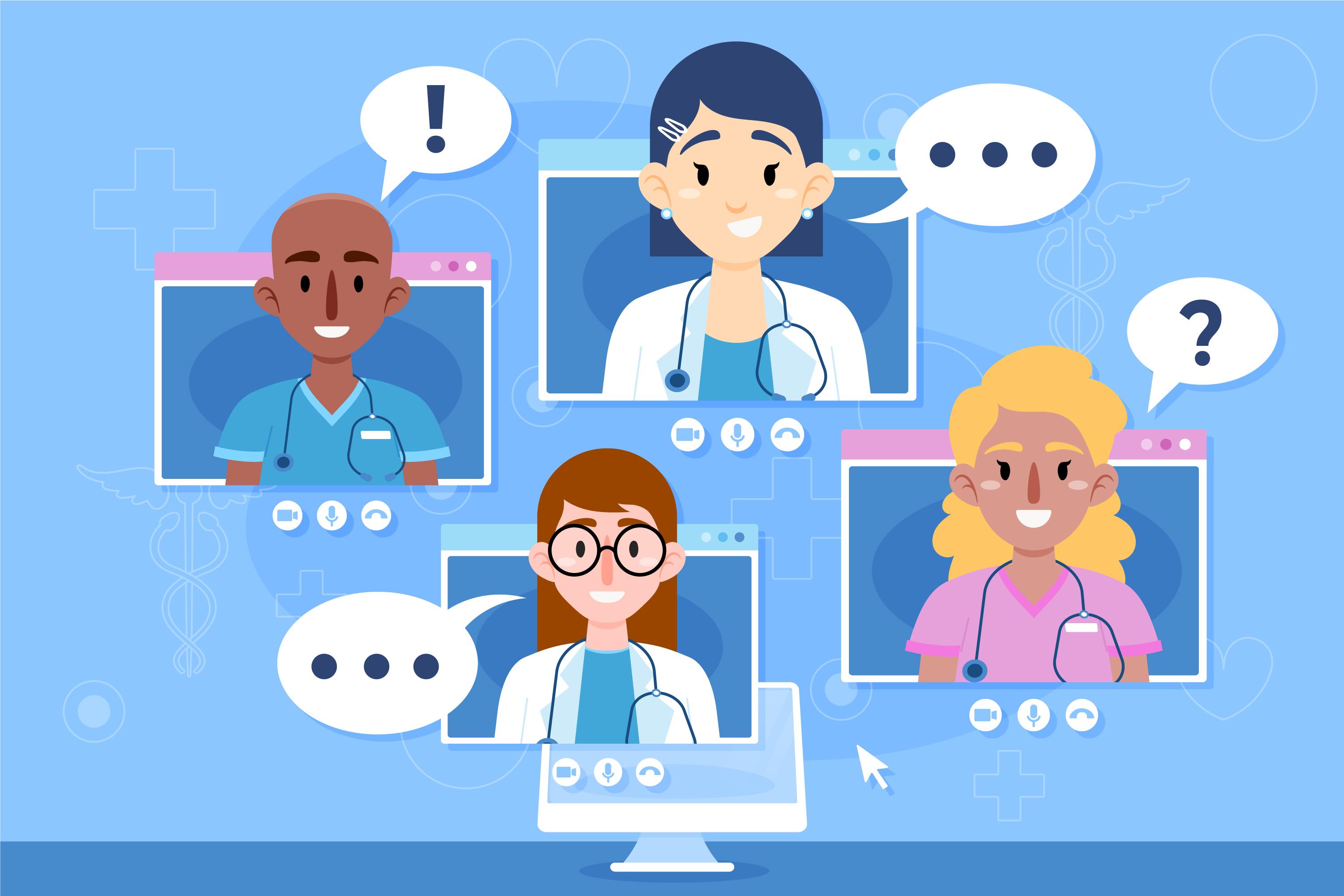
Telemedicine Communication
Virtual consults are now standard in India. The rules change slightly.
- Look at the camera, not the screen
- Speak slower than usual
- Confirm prescriptions in writing
- Always ask, “Could you repeat what I said, just so I know we are on the same page?”
The World Health Organization has stressed the growing importance of digital communication etiquette for modern clinicians.
Common Communication Mistakes to Avoid
Even experienced doctors fall into these traps.
- Interrupting patients mid-sentence
- Using technical jargon without explaining
- Avoiding eye contact while speaking
- Making promises about outcomes you can’t guarantee
- Rushing through consent explanations
- Forgetting to update families during long surgeries
- Discussing cases loudly in corridors
- Being dismissive of “non-serious” complaints
Small habits create big impressions.
How to Improve Your Communication Skills
Communication is not a talent. It is a practiced skill, just like suturing or reading an ECG.
- Observe senior consultants you admire and note their phrases
- Record yourself (with consent) and review your tone
- Read books like How Doctors Think by Jerome Groopman
- Take workshops on medical communication, which are now offered by many Indian universities
- Ask colleagues for honest feedback after difficult consultations
- Learn at least one regional language beyond your own, if possible
Final Thoughts
Great communication skills for doctors don’t happen overnight. They are built patient by patient, conversation by conversation. fumble sometimes. You will say the wrong thing. You will wish you had phrased it better. That is okay. Every single senior you admire was once exactly where you are now.
Remember, patients may forget the exact name of the medicine you prescribed, but they will never forget how you made them feel. In a profession where science and humanity meet, your words are often just as healing as your stethoscope.
Frequently Asked Questions
Why are communication skills important for doctors?
They directly impact patient trust, treatment adherence, safety, and medico-legal outcomes. Good communication is often the difference between a satisfied patient and a lawsuit.
How can junior doctors in India improve their bedside manner?
Observe experienced seniors, practice active listening, use simple language, and genuinely engage with patients instead of rushing through consultations.
What is the SPIKES framework in medical communication?
It is a structured, six-step approach used globally for delivering difficult news: Setting, Perception, Invitation, Knowledge, Emotions, and Strategy.
How do I handle angry patients or relatives in an Indian hospital?
Acknowledge their emotions first, stay calm, take them to a quieter space, and explain the situation clearly. Most anger fades when people feel truly heard.
Do communication skills really affect patient outcomes?
Yes. Studies show that patients with better doctor communication have higher treatment adherence, lower anxiety, and fewer complications.
Can communication skills be learned, or is it natural talent?
They can absolutely be learned. Like clinical skills, communication improves with observation, practice, feedback, and consistent effort.