
Every clinic has a moment before it wakes — a quiet hum, a still corridor, a stack of files waiting for stories that haven’t arrived yet. If you watch closely, you can almost hear the building inhale.
And then the day begins.
The pulse quickens.
The decisions multiply.
The room that was still becomes a theatre of judgement.
A clinic doesn’t breathe oxygen.
It breathes intent.
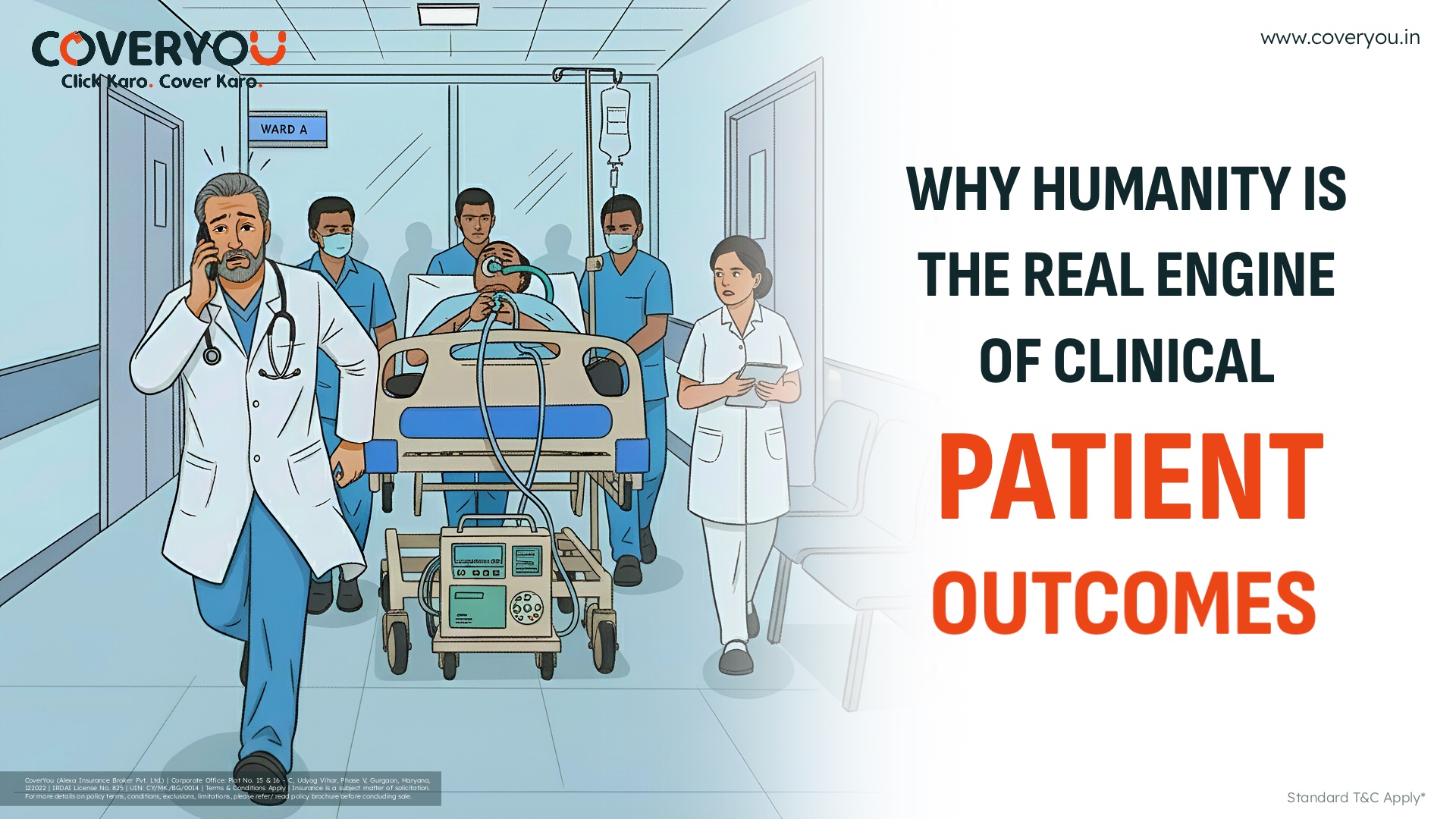
I’ve watched clinics long enough to understand that medicine isn’t just practiced — it is orchestrated.
Incrementally.
Quietly.
Sometimes invisibly.
The chaos you see in a long queue is not disorder.
It’s choreography.
A junior doctor repeating vitals.
A nurse anticipating a complication before anyone says it aloud.
A consultant processing information faster than the room can catch up.
A receptionist absorbing impatience like a shock absorber.
This rhythm — this breath — is what holds the system together.
And yet, the world sees only outcomes.
Never the micro-decisions that shape them.
The truth is simple:
A clinic is not just a building.
It is a living organism powered by people who don’t have the luxury of slowing down.
When a patient walks in, they see their problem.
When a doctor walks in, they carry every problem — past, present, and future.
And yet, doctors rarely pause to acknowledge the emotional architecture of their day.
The split-second doubt that feels heavier than it should.
The conversation that lingers between appointments.
The moment of empathy mistaken for admission.
The invisible guilt stitched into outcomes they could not control.
Clinics breathe through these moments.
And so do the people running them.
I once saw a doctor pause before entering a room.
Not because he was unsure of the diagnosis.
But because he knew the family inside was holding on to a hope medicine could not manufacture.
He inhaled.
Exhaled.
And entered with the dignity the situation demanded.
That’s the part nobody sees.
Not the corridor of uncertainty.
Not the emotional recalibration.
Not the fact that doctors walk into rooms carrying a balance of truth and compassion that almost no other profession requires.
**What keeps clinics functioning is not efficiency.
It’s humanity.**
The humanity to explain.
To pause.
To reframe.
To absorb.
To stand between science and fear and not collapse under the weight of either.
A clinic breathes because the people inside it refuse to stop breathing for others.
And that is the most extraordinary thing about healthcare —
its heartbeat is human, even when the world notices only the machines.