
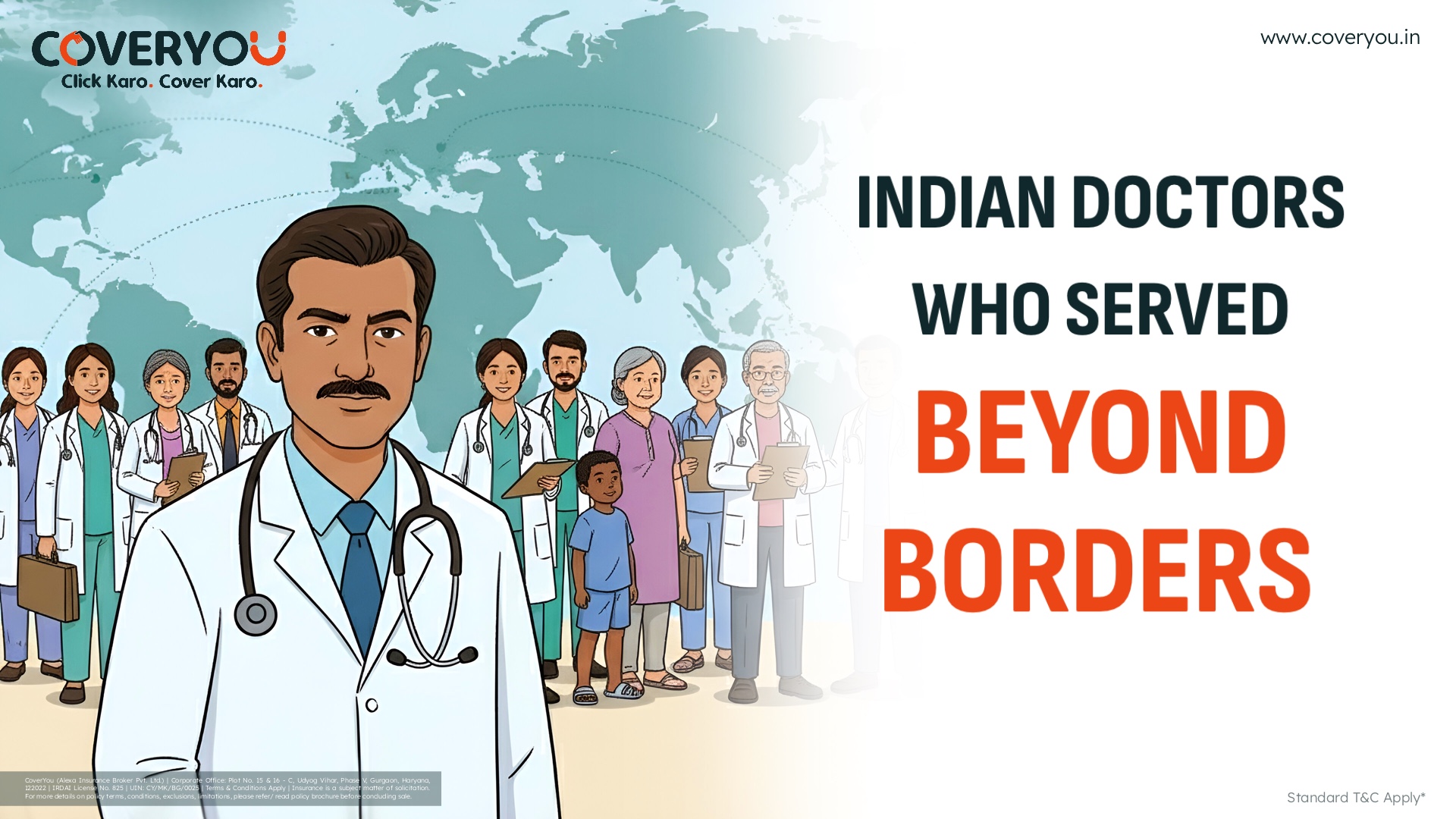
Long before Indian doctors became a global workforce, some travelled beyond borders for reasons that had nothing to do with opportunity.
They went because they were needed.
In the early twentieth century, Indian doctors were sent to places most had only read about – conflict zones, epidemic-hit regions, foreign hospitals struggling with shortages. They worked in conditions that offered little comfort and no recognition back home.
Their names did not travel as widely as their work.
In 1938, a small group of Indian medical professionals arrived in China to assist during the Sino-Japanese War. Among them were doctors who would spend years working under constant threat – treating soldiers and civilians alike, often with limited supplies and overwhelming caseloads.
They were not ambassadors.
They were physicians.
Records from that period describe surgeries performed in makeshift shelters, long hours without rest, and decisions taken without the safety of consultation or precedent. These doctors carried Indian medical training into environments where protocols were written in urgency, not manuals.
Some never returned.
Those who did rarely spoke about it. Their service was not framed as heroism. It was described simply as duty — an extension of what it meant to practise medicine.
Similar stories appear elsewhere.
Indian doctors working in Africa during outbreaks.
Medical teams assisting in refugee camps across borders.
Physicians stepping into systems not their own, guided only by skill and judgement.
What united these experiences was not nationality, but mindset.
Medicine, to them, was not confined by geography. The oath travelled with the practitioner.
These histories are rarely taught. They don’t fit neatly into modern narratives of medical success. There are no institutions named after many of them. No plaques marking their work.
But their legacy survives quietly – in the expectation that a doctor’s responsibility does not end at the edge of familiarity.
Today, Indian doctors are present across the world. The reasons are different. The systems are stronger. The protections are formalised.
But the underlying truth remains unchanged.
Medicine has always crossed borders.
It is responsibility that follows.
End.