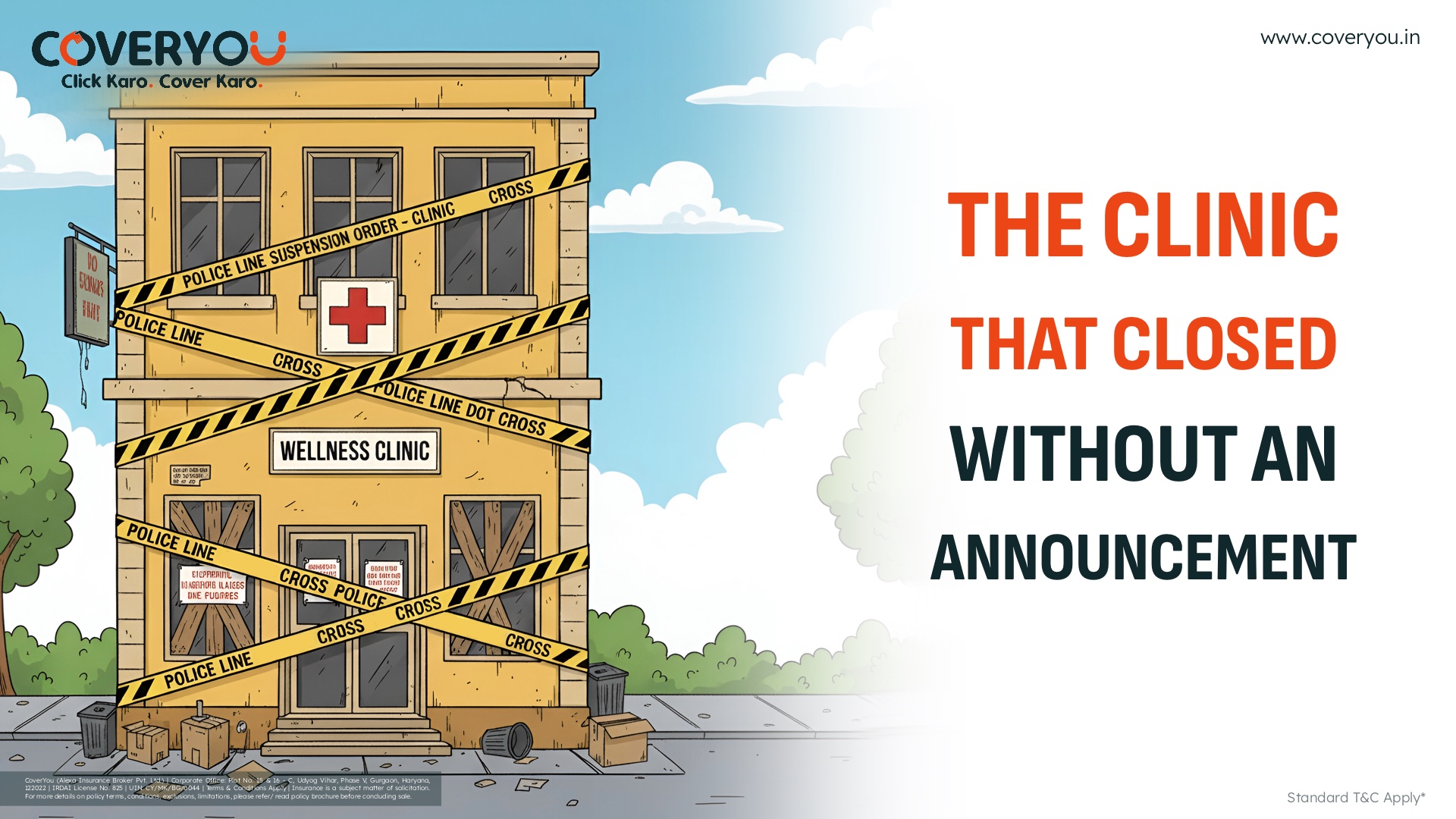


Many doctors assume insurance works like a switch.
Something goes wrong.
The policy activates.
Support follows.
That expectation is understandable. It’s also inaccurate.
Insurance does not activate at the moment something happens. It activates when a defined trigger, as written in the policy, is met. The difference between those two moments is where most confusion begins.
From a doctor’s point of view, the trigger feels obvious – a complication, a complaint, a legal notice, a demand for explanation. These moments carry emotional weight. They feel like the start of a problem.
From the policy’s point of view, they are not always events at all.
Policies are written around specific conditions:
- a formal claim,
- a legal proceeding,
- a demand that meets defined criteria,
- or an incident reported within a particular framework.
Until those conditions are met, the policy remains inactive – even if the situation feels serious.
This is why doctors often feel unsupported in the early stages.
They are dealing with:
- questions from families,
- internal reviews,
- administrative correspondence,
- or informal legal communication.
These moments matter deeply. But many policies do not recognize them as triggers.
The policy hasn’t failed.
It simply hasn’t started.
Another common assumption is that intent matters – that genuine effort, ethical practice, or a clean record should influence activation.
They don’t.
Insurance is indifferent to intention. It responds only to structure.
This can feel harsh, especially to professionals used to nuance and judgment. But insurance operates in a binary way: conditions are either met, or they are not.
This gap between expectation and mechanism is why frustration builds.
Doctors feel exposed. Insurers appear unresponsive. In reality, both are operating within systems that were never aligned clearly enough at the outset.
Understanding this doesn’t make difficult moments easier. But it does change how they are navigated.
Experienced practitioners don’t wait for insurance to “kick in.” They focus on process alignment – knowing when to inform, how to document, and what qualifies as escalation.
Because insurance doesn’t move with emotion.
It moves with definition.
And the moment you think it should activate is often not the moment it actually does.
End.