
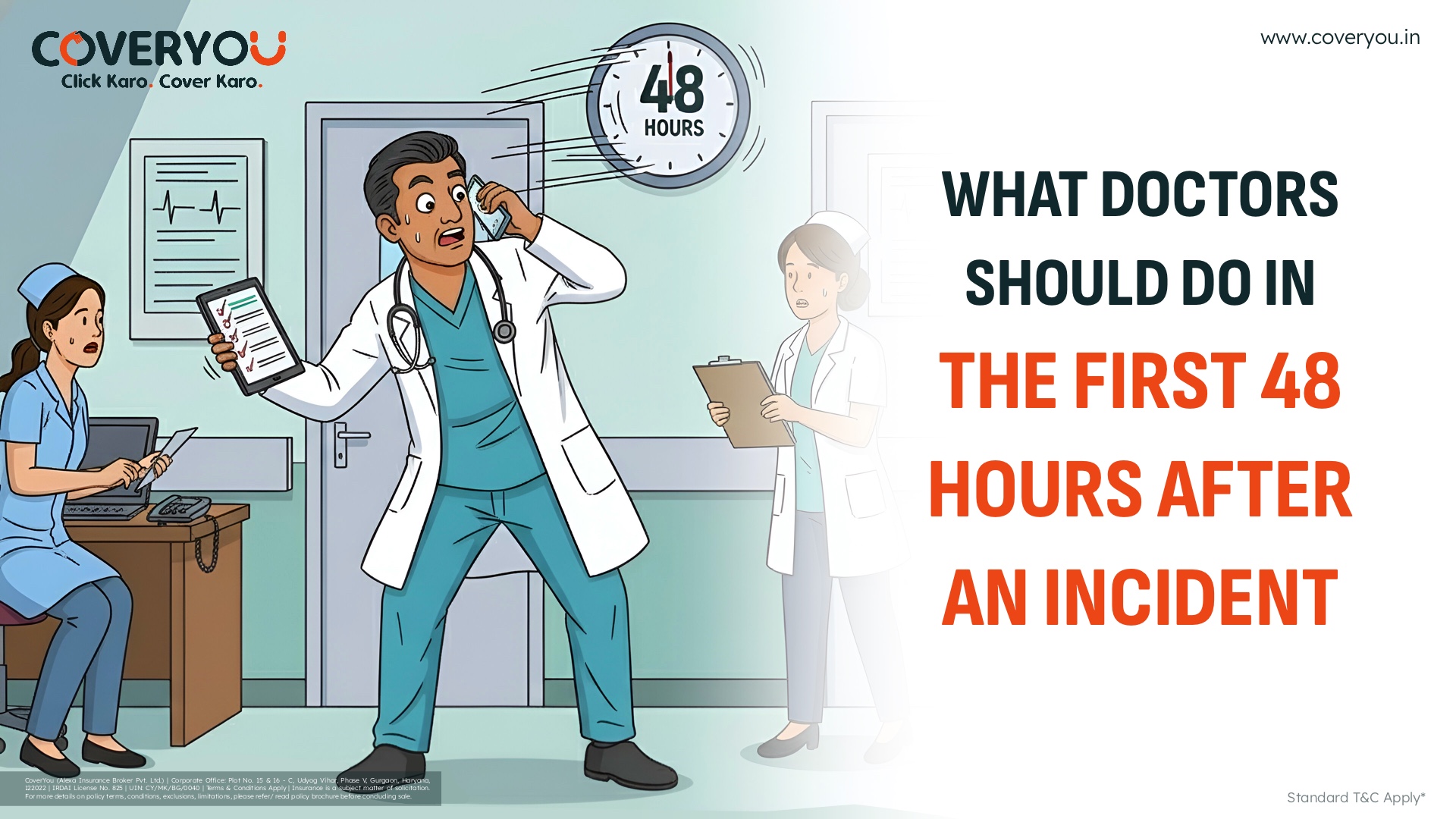
The first 48 hours after an incident feel deceptively important.
Doctors often believe these hours will define outcomes. That every action — or inaction — carries irreversible weight.
In practice, these hours matter less for resolution and more for orientation.
Here is what they are actually for.
Stabilising Care
Patient care comes first. This is instinctive and rarely missed.
What matters is documenting what was done — clearly, contemporaneously, and without reinterpretation.
Preserving Records
The goal is not to add new information, but to preserve what already exists.
Case sheets, investigation reports, consent forms, and communication records should remain intact and unaltered.
Clarity matters more than completeness at this stage.
Avoiding Premature Conclusions
Doctors often feel pressure to explain, apologise, or speculate.
The first 48 hours are not for narrative.
They are for accuracy.
What is said casually during this period is often remembered longer than intended.
Creating Space
This period is about slowing down reactions, not accelerating responses.
Escalation can happen later. Formal processes have their own timelines.
Immediate calm reduces long-term complication.
What These Hours Are Not
They are not:
- a window to resolve everything,
- a test of professional worth,
- or a demand for certainty.
They are a pause.
Used well, they set tone without forcing outcome.
Most issues evolve over time.
The first 48 hours simply decide whether that evolution begins from clarity — or confusion.