
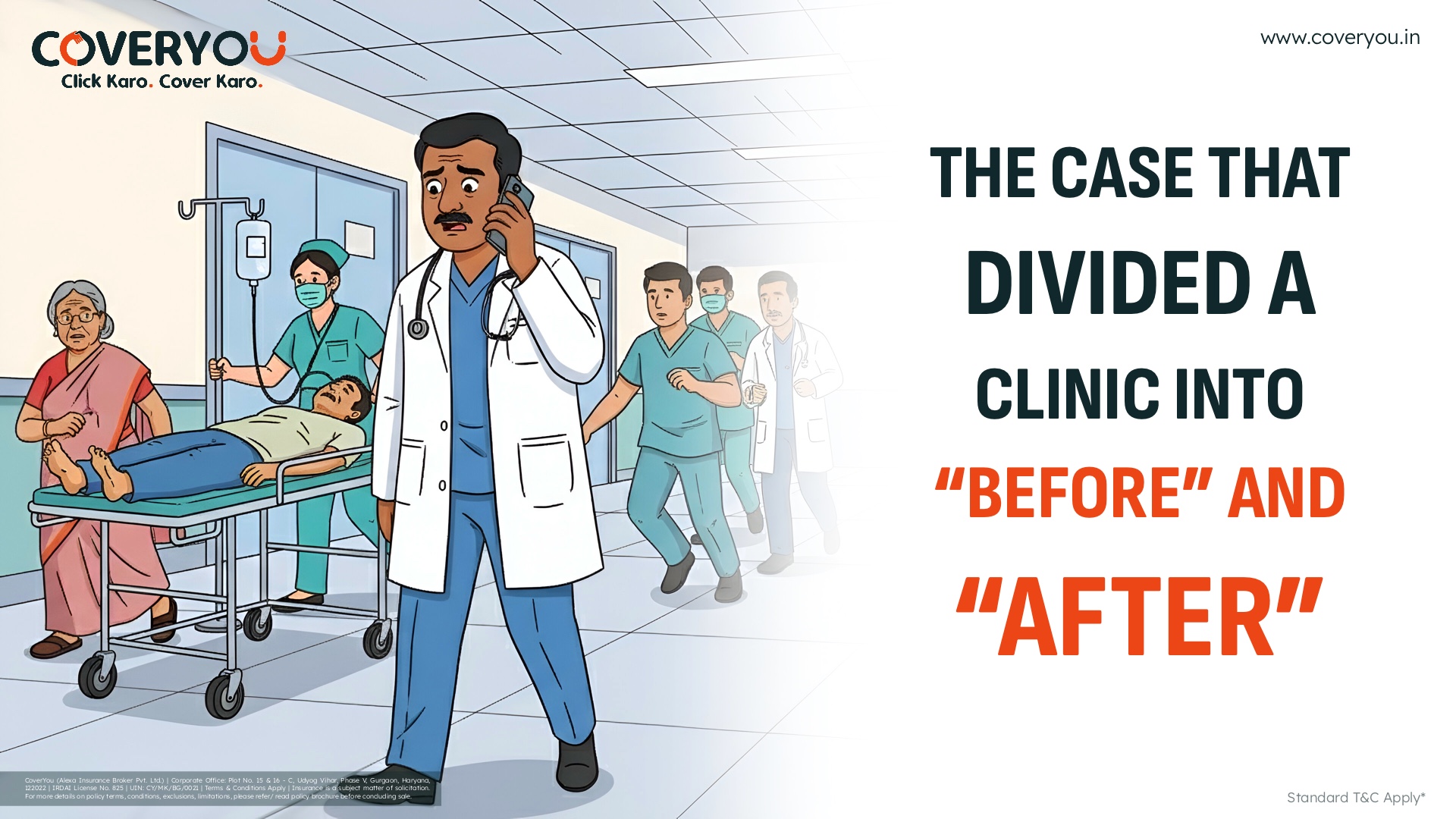
No one said it out loud at first.
It showed up in smaller ways.
The nurse started double-checking forms she had never doubted before. The receptionist began asking one extra question while booking appointments. Files were kept on desks longer and reviewed more than once.
Nothing was announced.
No meeting was called.
But everyone knew.
There was a before.
And now there was an after.
The case itself didn’t arrive like a storm. It unfolded slowly, over days, then weeks. Questions were asked. Clarifications were sought. Timelines were revisited.
The clinic continued to function. Patients came in. Procedures were done. Laughter still floated in from the waiting area occasionally.
But something fundamental had shifted.
Earlier, decisions moved quickly. There was trust – in systems, in judgement, and in each other. After the case, every decision carried a faint echo.
“Let’s just check once more.”
“Should we document this?”
“Maybe we should explain it again.”
These weren’t signs of fear. They were signs of memory.
A clinic is not just rooms and equipment. It is a shared rhythm – an unspoken agreement about how things are done. One case can interrupt that rhythm permanently.
Some staff members remembered the exact day it started. Others remembered only the feeling – the subtle tightening in the room whenever a similar situation appeared.
New joiners wouldn’t know why certain steps were followed so carefully. They would just be told, “This is how we do things here.”
The story would never be fully explained.
Because clinics don’t archive emotions.
They absorb them.
Months later, someone referred to a situation casually.
“This isn’t like that case,” they said.
Everyone understood which one.
The clinic had survived.
It had adapted.
But the division remained.
Not in records.
Not in policies.
Only in the quiet agreement that some days are never just days — they become reference points.
Before.
And after.
End.