
The words came out before he had time to stop them.
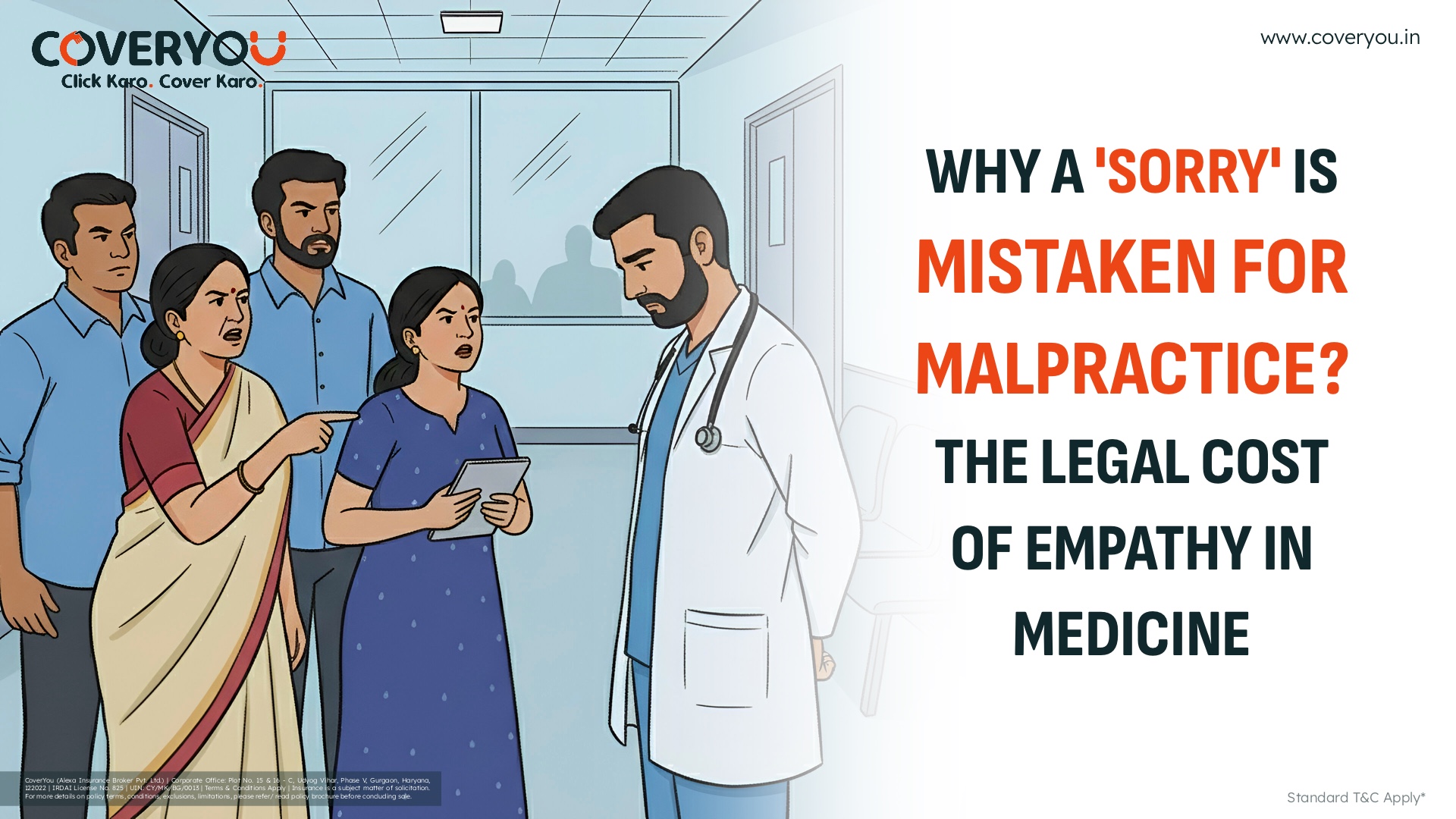
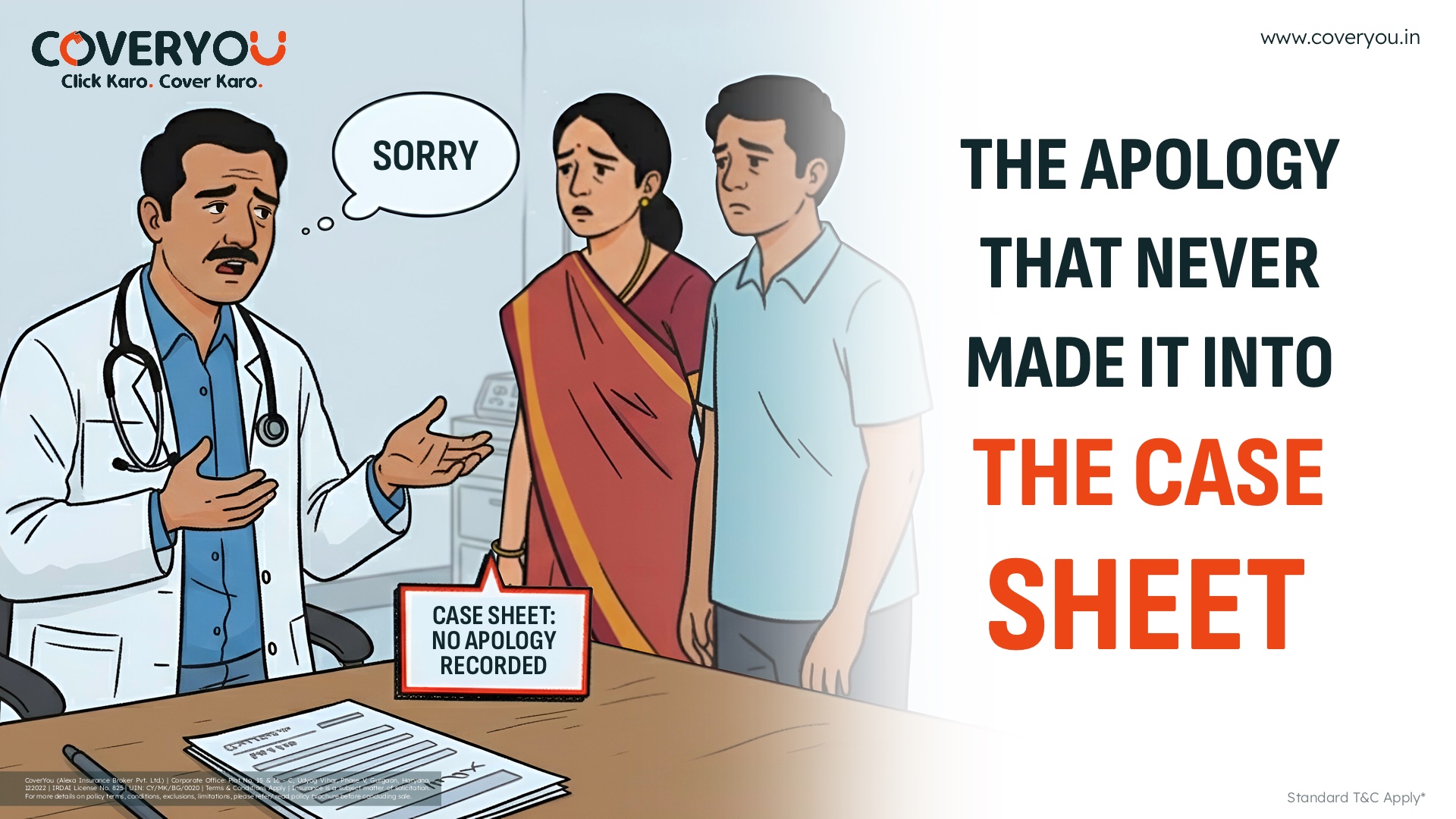
“I’m sorry.”
They weren’t dramatic.
They weren’t rehearsed.
Just two words spoken instinctively, in the small gap between explanation and silence.
The patient’s relative nodded. Someone else in the room sighed – not with anger, but with relief. The moment passed quickly, the way these moments usually do.
The doctor moved on to the next case.
By evening, the clinic was full again. The waiting area buzzed with impatience. The nurse asked about investigations. The receptionist waved him over to sign a form.
The apology was already forgotten – at least consciously.
It never made it into the case sheet.
Because apologies never do.
They sit outside documentation.
Outside protocols.
Outside what is taught.
Later that week, a colleague mentioned it casually.
“You handled that well,” he said. “You said sorry. It calmed them down.”
The doctor nodded, unsure how to respond.
Medical training teaches many things – precision, restraint, confidence. But it rarely teaches where empathy ends and liability begins. Most doctors learn that boundary only after crossing it.
Usually without realising it.
At the time, the apology felt human. Necessary, even. A way to acknowledge uncertainty without surrendering competence.
But apologies have a way of changing shape once they leave the room.
They travel.
They get repeated.
They get remembered differently.
Weeks later, when the case resurfaced – quietly at first – the doctor tried to recall the exact moment.
What did he say?
How did he say it?
Who was in the room?
There was no record to return to.
Only memory.
And memory, under pressure, is unreliable.
The case sheet was clean. Accurate. Thorough.
But it didn’t capture the pause before the apology.
Or the look that followed it.
Or the way those two words were interpreted by ears that heard fear instead of reassurance.
This is not a story about saying the wrong thing.
It’s about how quickly something said in good faith becomes something remembered differently.
Most doctors don’t regret apologising.
They regret not knowing what those words would later become.
The apology never entered the case sheet.
But it stayed.
End.