
The consultation ended on time.
The patient stood up, thanked the doctor, and left. The door closed softly behind them. Outside, the next name was already being called.
There was a pause.
Not long enough to be noticed.
Not short enough to be empty.
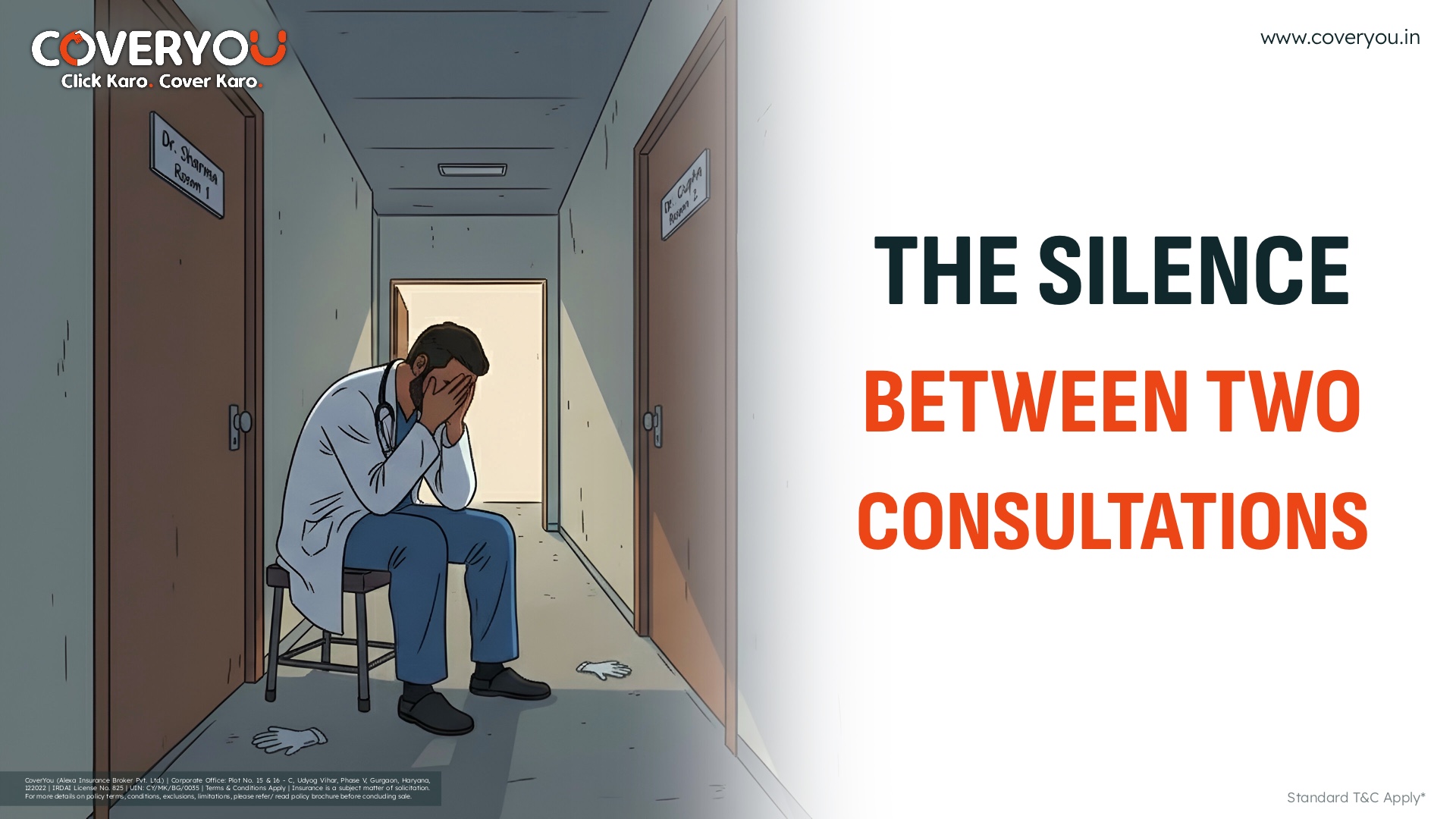
Just a few seconds where the room was quiet.
The doctor didn’t reach for the next file immediately. He looked at the desk instead — at the pen, the case sheet, the faint indentation left by years of writing in the same place.
Nothing significant had happened in the consultation. No complication. No disagreement. No uncertainty that demanded attention.
And yet, the silence stayed.
Between two consultations lies a space that medicine doesn’t formally recognise. It’s not break time. Not reflection. Not documentation.
It’s simply a moment where the previous case hasn’t fully left and the next one hasn’t fully arrived.
Most days, doctors move through this space without noticing it. Habit carries them forward. The rhythm of the clinic leaves little room for interruption.
But some days, the silence stretches.
A sentence lingers — something a patient said casually, without emphasis. A look that didn’t align with the words spoken. A hesitation that felt familiar but unexplained.
The doctor is trained not to dwell.
The next patient is waiting. The system expects continuity. Momentum matters.
So the pause is absorbed.
Over time, these silences accumulate. Not as stress, but as texture — subtle adjustments in how questions are asked, how answers are framed, how certainty is expressed.
Medicine often celebrates decisiveness. But much of practice is shaped in indecision — in moments where no action is taken, no note is written, no discussion follows.
The silence between consultations is where judgement recalibrates quietly.
It’s where experience settles into instinct.
By the time the next patient sits down, the pause has disappeared. The doctor is present again. Attentive. Composed.
But something has already shifted — slightly, imperceptibly.
And that is often how practice evolves.
Not through dramatic events.
But through the spaces in between.
End.