
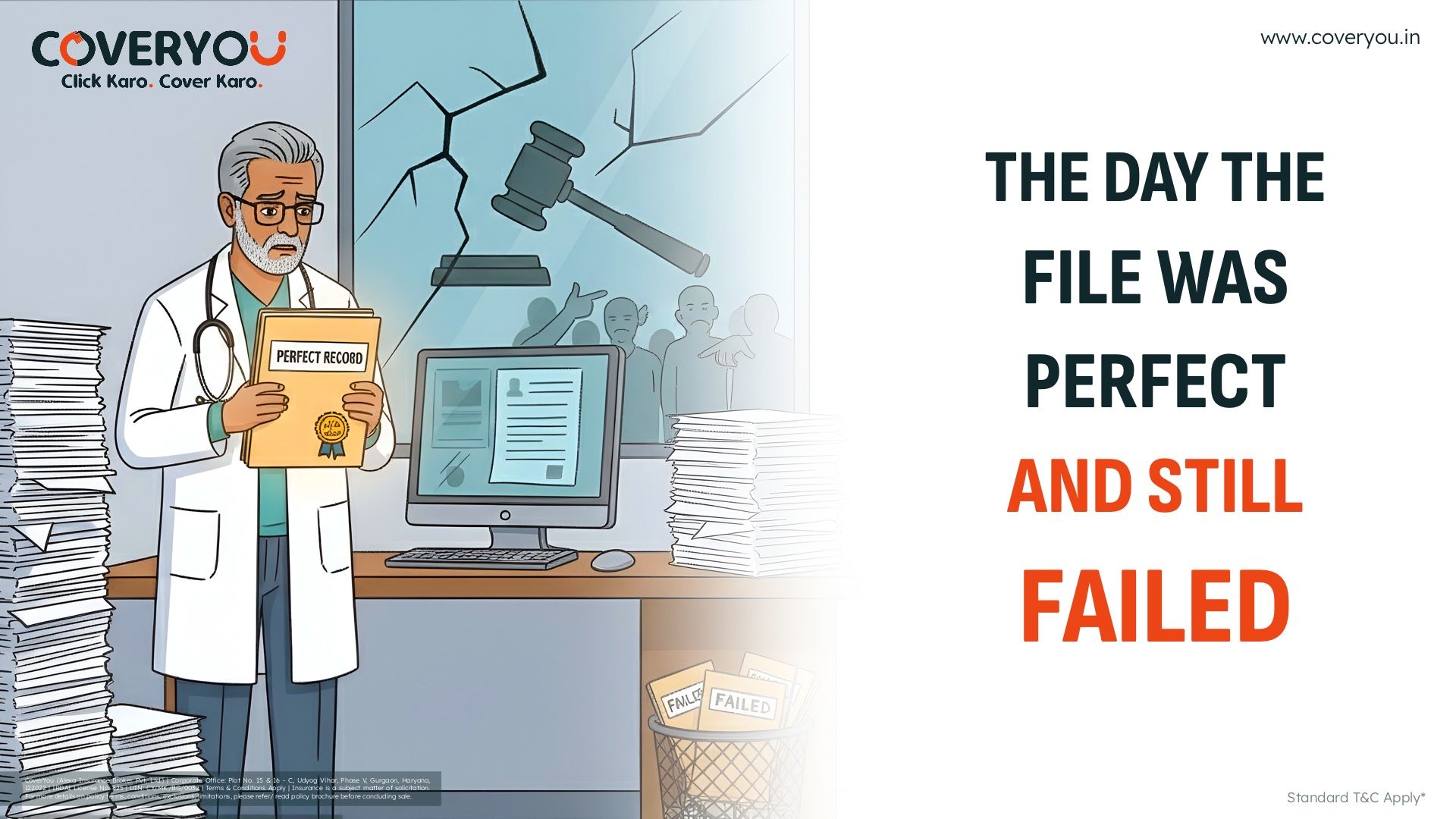
The file was perfect.
Every page was in order. Dates aligned. Signatures were present. Investigations were attached exactly where they should be. Anyone reviewing it would have found nothing missing.
The doctor knew this because he had checked it himself — twice.
When the question first came, there was no panic. No scrambling. He reached for the file with confidence, the way one does when they believe preparation will speak for itself.
“This should be enough,” he said.
It usually is.
The problem was not what was written.
It was what the file assumed would be understood.
Medicine teaches doctors to document facts, not interpretations. To record observations, not atmosphere. To trust that a reasonable reader will fill in the gaps the same way they would.
That assumption held for years.
Until it didn’t.
The issue raised wasn’t about negligence. It wasn’t about missing information. It was about intent — why one option was chosen over another when both were acceptable.
The file didn’t explain that.
It couldn’t.
Because the decision had been made in a moment shaped by experience, context, and judgement — none of which had a dedicated line.
On paper, the case looked linear.
In reality, it wasn’t.
As questions accumulated, the doctor realised something uncomfortable.
Perfection in documentation does not guarantee alignment in interpretation.
The file had done exactly what it was meant to do — record events. But it hadn’t anticipated the lens through which those events would later be viewed.
The doctor wasn’t worried about errors.
He was worried about misunderstanding.
And misunderstanding is harder to correct than mistakes.
By the end of the day, the file was returned to its place. Still perfect. Still complete.
But no longer sufficient on its own.
This is the quiet failure many doctors encounter — not because they were careless, but because systems expect documentation to do work it was never designed for.
The file didn’t fail because it was incomplete.
It failed because it was asked to speak for a moment that had already passed.