
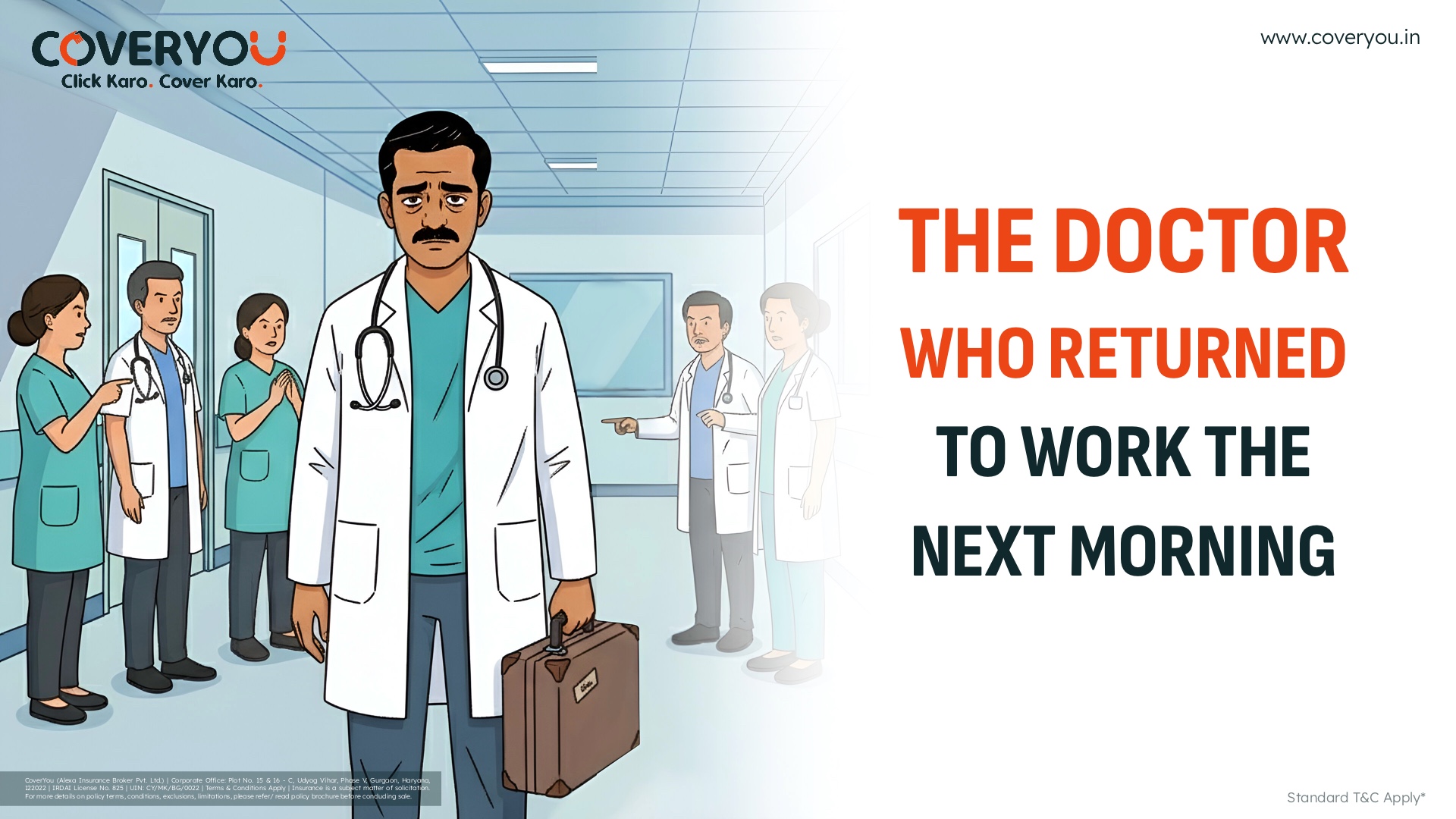
He returned to work the next morning.
Not out of courage.
Not out of denial.
Because that’s what doctors do.
The clinic opened at the usual time. The nurse unlocked the door. The receptionist logged into the system. Appointments appeared on the screen in neat rows.
No one asked if the clinic should remain closed.
There was nothing official enough to justify it.
The doctor arrived a few minutes early. He stood outside for a moment longer than usual, keys in hand, listening to the familiar sounds of the building waking up.
Inside, everything was unchanged.
The same chair.
The same table.
The same case sheets waiting to be opened.
Only the weight had shifted.
He worked carefully that day. More slowly. More deliberately. Every decision carried awareness — not fear, just attention sharpened by recent memory.
Patients noticed nothing.
They rarely do.
To them, the doctor was present, composed, reassuring. He listened. He advised. He moved from one consultation to the next without interruption.
Between patients, there were pauses.
Small ones.
Moments where his eyes lingered on a file a second longer. Moments where he re-read a line he had written himself.
There was no breakdown. No visible struggle.
Medicine does not pause for reflection.
It continues — because people are waiting.
By evening, the day had folded into itself like any other. The clinic closed. The lights went off. The doctor left without ceremony.
The incident did not resolve itself.
The questions did not disappear.
But the work had continued.
This is not exceptional.
It happens every day — quietly, repeatedly.
Doctors do not get recovery time from uncertainty. They carry it forward, into the next consultation, the next decision, the next day.
They return to work not because everything is settled, but because responsibility doesn’t wait for closure.
And so, the clinic opened.
Again.
End.