
By the time he reached home, the day was already over.
On paper, it had been an ordinary clinic day. Consultations completed. Prescriptions written. Investigations advised. Nothing complicated enough to warrant a note in the margin.
The records were clean.
But the day didn’t end at the clinic door.
At home, his shoes stayed by the entrance longer than usual. He washed his hands out of habit, even though he had already done so before leaving. Dinner was warm. Conversation moved around him.
Someone asked how the day went.
“Normal,” he said.
Doctors learn early what qualifies as normal. It isn’t the absence of stress – it’s the ability to function despite it.
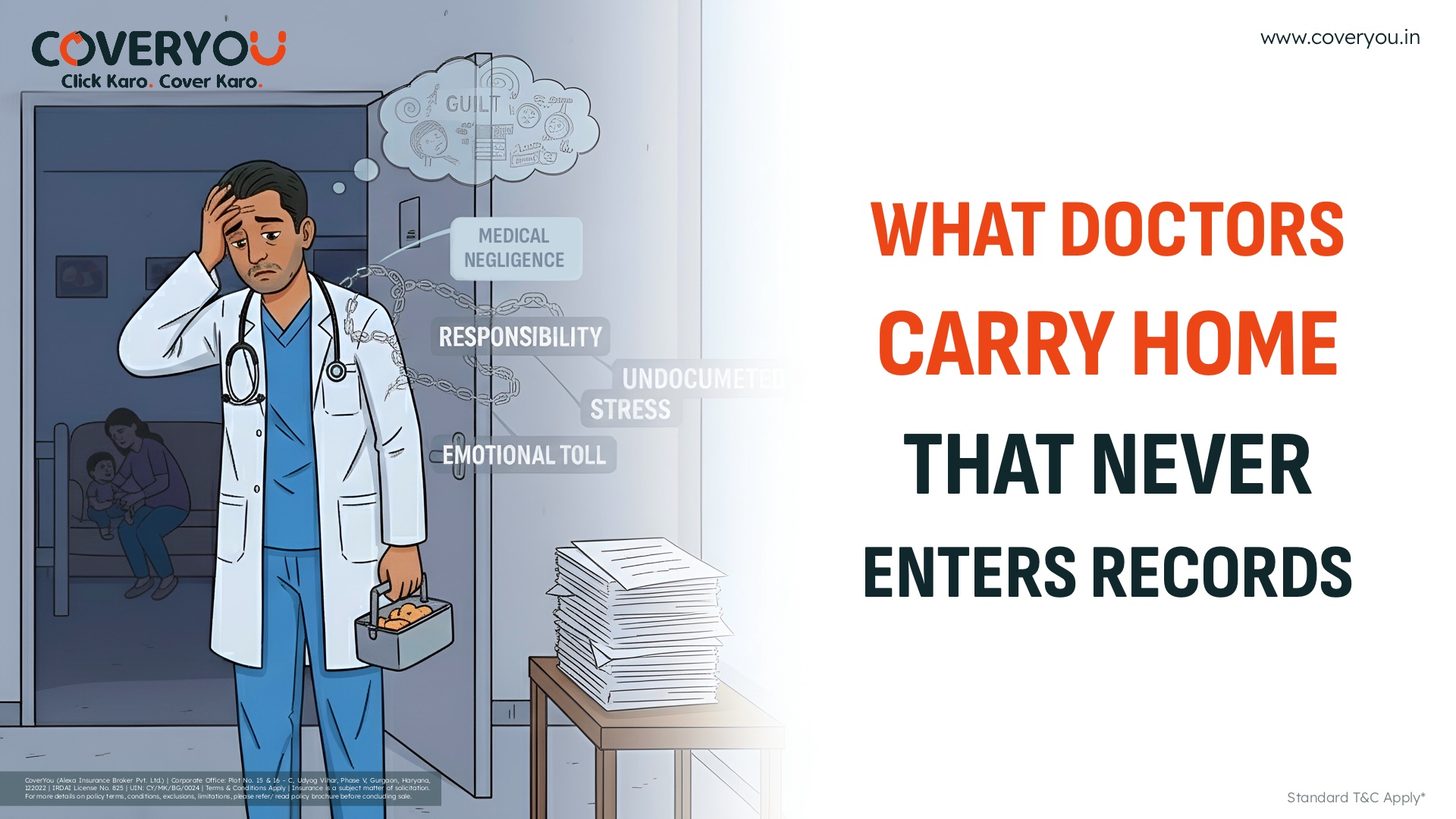
What they carry home rarely has names.
A question a patient asked that had no clear answer.
A look from a relative that lingered longer than expected.
A decision that was correct but uncomfortable.
None of these enter records.
There is no column for doubt.
No field for second thoughts.
No checkbox for emotional residue.
Later that night, while brushing his teeth, a fragment of the day returned without invitation – a sentence, half-spoken, that he wished he had framed differently.
He would not mention it tomorrow.
There would be no follow-up note.
The system doesn’t ask for it.
Medicine rewards composure. It expects certainty, even when none exists. Over time, doctors learn to compress uncertainty into something manageable – something that fits between appointments.
But compression doesn’t eliminate weight.
It just makes it portable.
Some days, what they carry home is light – an unresolved thought, a minor worry.
Other days, it’s heavier.
And still, the next morning, they return.
The records remain pristine.
The burden remains personal.
This is not burnout.
Not fatigue.
It is something quieter.
The accumulation of things that never needed documentation – until they did.
End.