
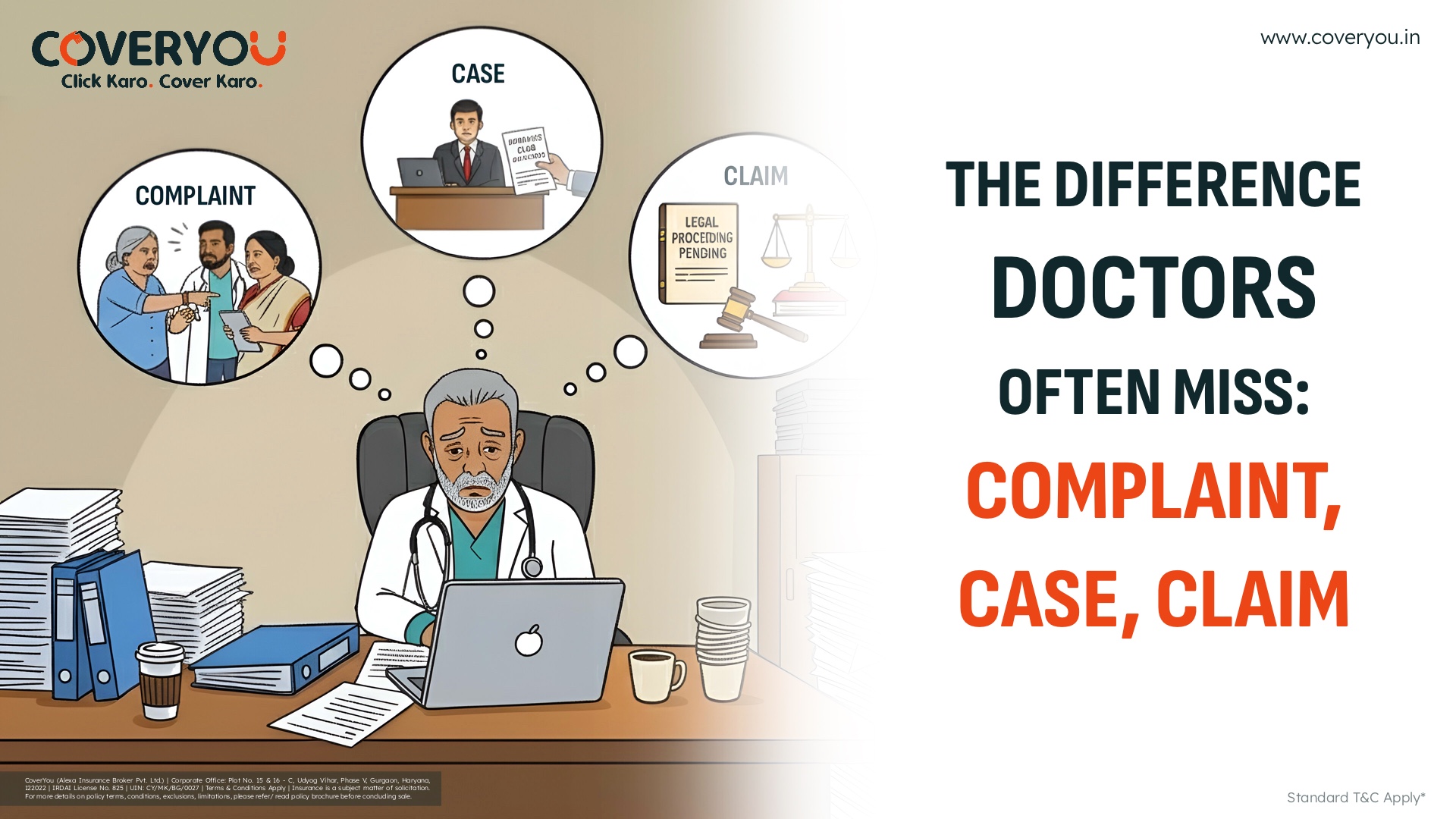
The words are often used interchangeably.
Complaint.
Case.
Claim.
They sound similar. They feel similar. And in moments of stress, they blend into one.
But they are not the same.
Understanding the difference matters — not legally alone, but psychologically.
A Complaint
A complaint is an expression of dissatisfaction.
It may be verbal or written.
It may come from a patient, a family member, or an authority.
It may never leave the clinic.
Complaints ask questions.
They do not assign outcomes.
Most complaints resolve at this stage — through explanation, clarification, or time.
Importantly, a complaint does not automatically imply fault.
A Case
A case begins when a formal process is initiated.
This could involve:
- a legal notice,
- a regulatory inquiry,
- or a matter taken up by a forum or authority.
At this stage, documentation becomes central. Timelines matter. Responses are structured.
A case is procedural.
It moves forward whether emotions settle or not. But even here, resolution does not imply guilt. Many cases conclude without findings of negligence.
A Claim
A claim is specific.
It is a request for compensation or coverage under defined terms. It operates within a framework — insurance, legal liability, or contractual obligation.
Claims are not driven by narrative.
They are driven by alignment with criteria.
This is where expectations often clash with reality — because claims are evaluated on documentation, definitions, and thresholds, not on intent.
Why the Distinction Matters
When doctors treat every complaint as a case, anxiety escalates unnecessarily. When every case is assumed to be a claim, expectations become distorted.
Each stage requires a different response:
- Complaints require listening.
- Cases require structure.
- Claims require precision.
Understanding where you are in this sequence brings clarity.
Not every issue progresses.
Not every notice becomes a claim.
Most importantly, not every question is an accusation.
Separating these terms doesn’t minimise risk.
It restores proportion.
End.