

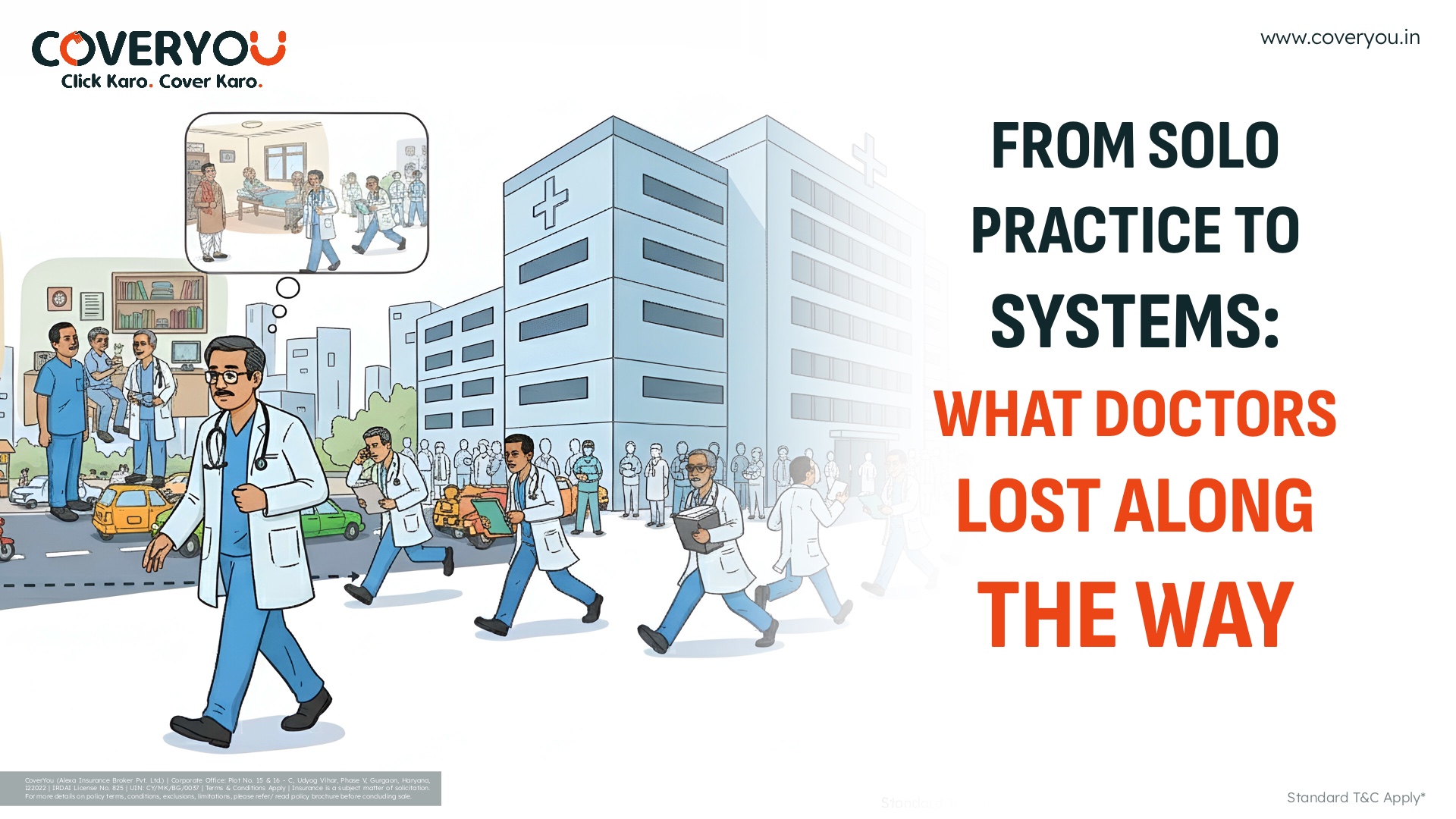
There was a time when medical practice was defined by presence.
A single doctor.
A familiar clinic.
Patients who knew where to find care without checking schedules or platforms.
Decisions were made in rooms where responsibility had a face. Outcomes – good or bad – were attributed to individuals, not departments.
As medicine expanded, this model began to change.
Hospitals grew larger. Specialisation deepened. Teams replaced individuals. What was once a personal practice became a coordinated system.
This shift brought undeniable progress.
Complex cases could now be managed collaboratively. Diagnostics improved. Access widened. No single doctor was expected to carry the entire burden of modern medicine alone.
But something else changed quietly.
In solo practice, accountability was immediate.
In systems, it became distributed.
Decisions were now shaped by protocols. Responsibility moved across departments. Outcomes depended on coordination as much as judgement.
This was necessary – but it altered how doctors related to their work.
Earlier, doctors owned the full arc of care. From first consultation to follow-up, continuity was implicit. In systems, care became segmented. Handoffs increased. Documentation replaced familiarity.
The doctor’s role narrowed – not in importance, but in scope.
What was lost was not authority, but visibility.
Doctors began working within frameworks they did not design, governed by processes they did not control. Their judgement mattered, but only within defined lanes.
This altered professional identity.
Earlier, a doctor’s practice reflected their philosophy. Today, it reflects the system’s capacity. Quality still matters – but expression is constrained.
Patients adapted too.
Trust shifted from individuals to institutions. Reputation followed hospitals, not names. Responsibility felt abstract, even when care remained personal at the bedside.
The move from solo practice to systems was inevitable.
But it came with trade-offs that are rarely acknowledged.
Medicine became safer.
More consistent.
More scalable.
And less personal – unless consciously preserved.
The challenge now is not to resist systems but to remember what was lost in the transition.
Not to reclaim the past, but to protect the human judgment that once defined it.
End.